


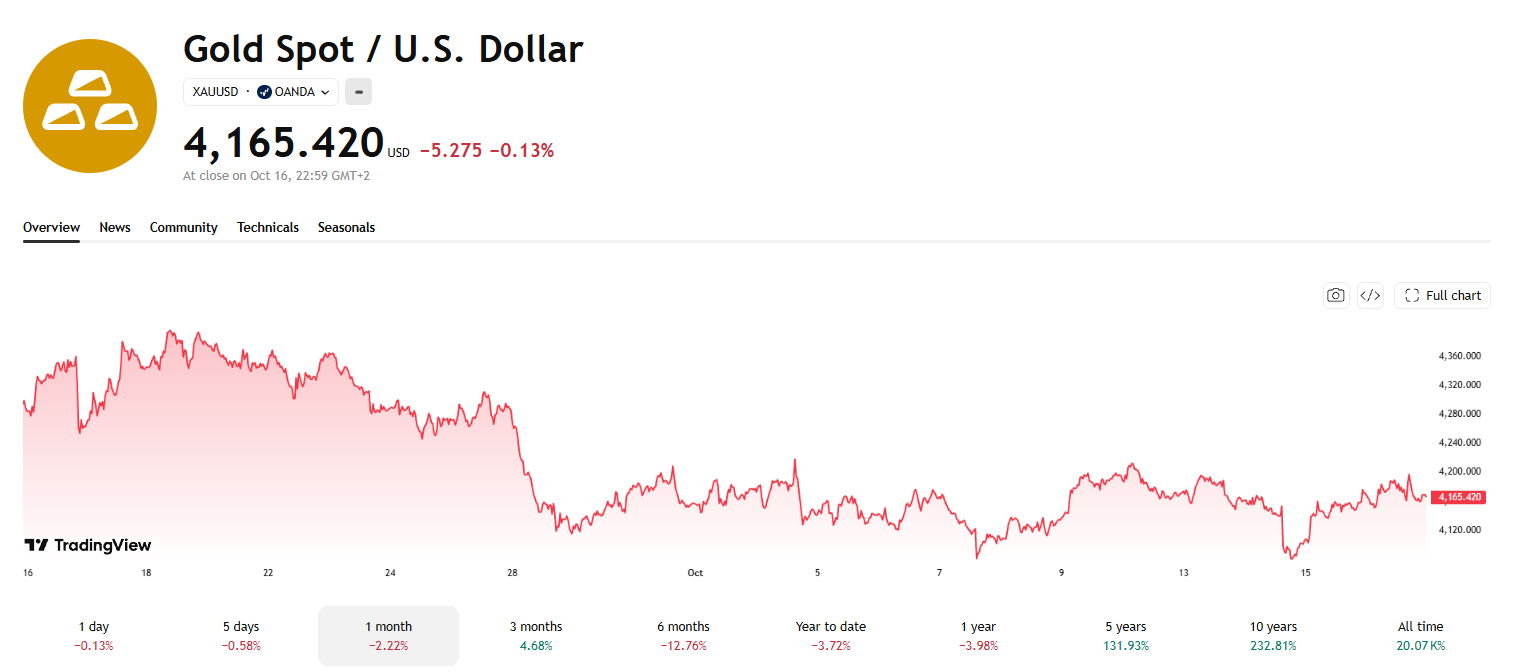
Gold prices came under pressure this week as stronger-than-expected US inflation data raised expectations that the Federal Reserve could keep interest rates higher for longer. However, economist Peter Schiff sees the decline differently. With gold trading near $4,145, he described the price as a potential gift for buyers.
The reaction has raised an important question: why is gold falling when inflation remains stubbornly high?
Strong Inflation Data Puts Pressure on Gold
Three separate inflation reports delivered hotter readings than markets had anticipated.
September’s Consumer Price Index (CPI) showed annual inflation at 3.7%, exceeding the 3.6% forecast. Producer prices then recorded a 6.3% annual increase, their largest rise since 2022. Import prices also climbed 1.1% in September, above economists’ 0.8% estimate.
Despite these inflationary signals, gold moved lower as traders reassessed the outlook for monetary policy.
Higher interest rates tend to weigh on gold because the metal does not generate interest income. If the Federal Reserve maintains a restrictive policy for longer, interest-bearing assets may become more appealing to investors.
Gold declined roughly 0.6% over the week and lost more than 2% over the preceding month. The biggest daily drop followed the CPI release, although prices subsequently recovered some ground.
Why Schiff Believes Gold Is Undervalued
Schiff argues that persistent inflation is evidence that the Federal Reserve has failed to bring price pressures under control.
CPI, PPI and import prices all came in hotter than expected this week. Traders sold gold anyway. They think it means the Fed will fight harder. It means the Fed already lost. Gold at $4,145 is a gift.https://t.co/wGO2bHHVdM
— Peter Schiff (@PeterSchiff) October 17, 2026
From his perspective, the latest decline does not weaken the long-term case for gold. Instead, it creates an opportunity to buy the metal at a lower price before investors potentially reassess the effectiveness of the Fed’s policies.
He also questioned why gold failed to rally following the latest inflation readings, suggesting that the market had given buyers an unexpected opportunity.
His argument depends on a different interpretation of the data. While many traders see higher inflation as a reason for additional rate increases, Schiff views it as evidence that monetary tightening has not solved the underlying problem.
Markets Still Expect Further Rate Increases
Investors have yet to fully embrace Schiff’s outlook.
According to the market expectations cited by Kitco, CME FedWatch pricing indicated a 90% probability of a December rate hike. Federal Reserve Chair Kevin Warsh also struck an optimistic tone about the US economy, though he did not provide a clear indication of the next interest-rate decision.
Capital Economics analyst Hamad Hussain expects gold prices to face further pressure toward the end of the year if the Fed continues raising rates. Bank of America has similarly projected that gold could trade below $4,
