


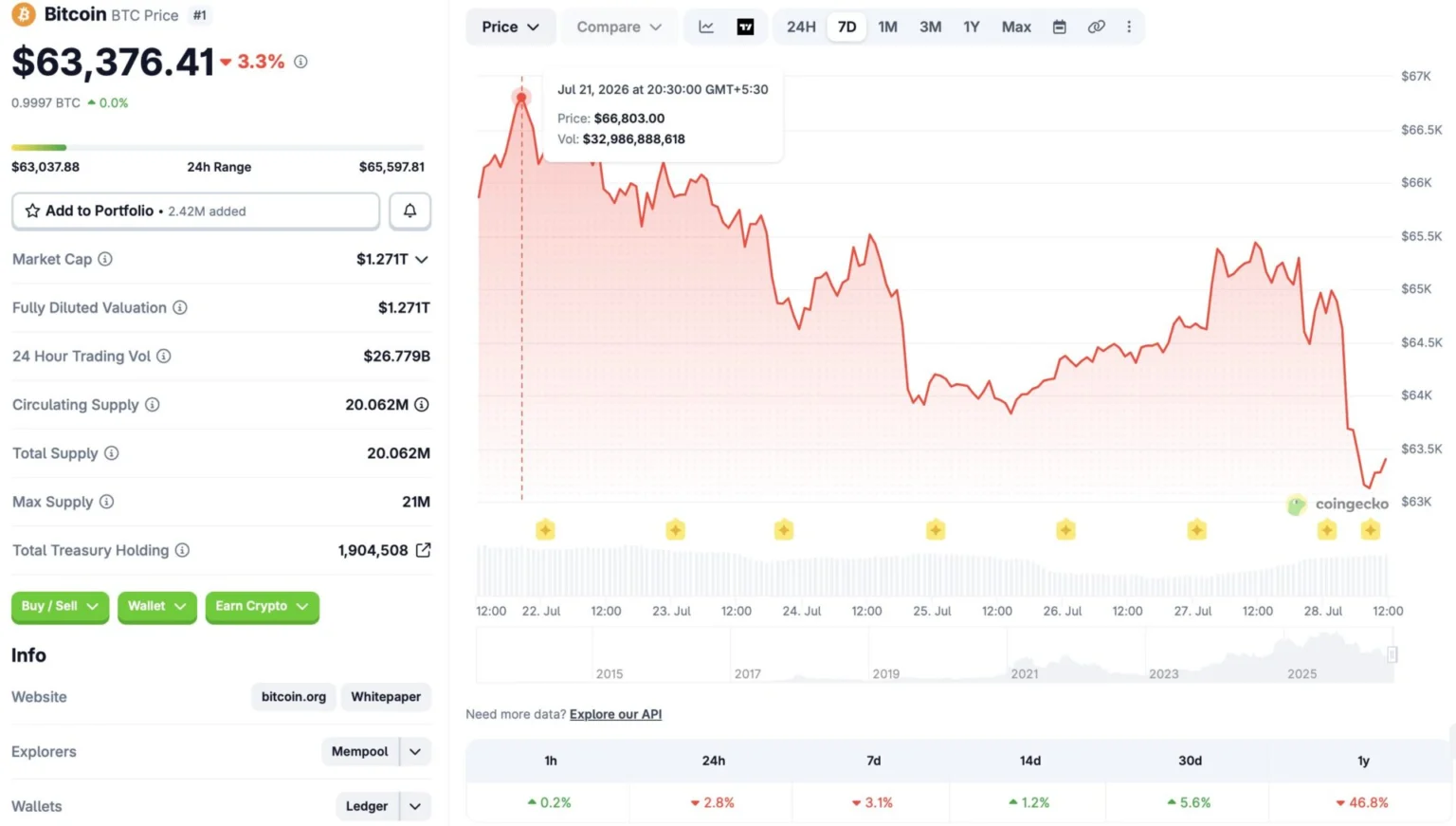
Bitcoin (BTC) has slipped back to the $63,000 range after briefly reclaiming the $66,000 mark earlier this month. According to CoinGecko data, the leading cryptocurrency is down roughly 3% over both the past 24 hours and the past week. Despite the recent pullback, BTC remains about 5.6% higher than it was a month ago.
What’s Behind Bitcoin’s Latest Decline?
Several factors appear to be weighing on Bitcoin’s price. A broad sell-off in technology and AI-related stocks has dampened investor sentiment, and the cautious mood has extended into the cryptocurrency market.
Major South Korean chipmakers, including SK Hynix and Samsung, recently experienced sharp declines amid rising competition from Chinese firms and increasing market uncertainty. Weakness across the AI sector has contributed to a broader risk-off environment, affecting digital assets such as Bitcoin.
Another potential factor is recent institutional activity. Reports indicate that BlackRock sold more than $400 million worth of Bitcoin last week. Although the market appears to have absorbed the sale without major disruption, the move may have encouraged some retail investors to reduce their own exposure.
Can Bitcoin Regain Momentum?
Bitcoin continues to face strong resistance around the $66,000 level. After reaching approximately $82,000 in May, the cryptocurrency has struggled to build sustained upward momentum.

Ongoing geopolitical tensions between the United States and Iran have also hurt investor confidence, increasing volatility across financial markets.
Inflation concerns are another issue drawing attention. Rising oil prices, fueled by renewed tensions in the Middle East, could contribute to higher inflation during July 2026. If inflation remains elevated, the Federal Reserve may choose to keep interest rates higher for longer or introduce additional rate hikes. Such a scenario would likely create further headwinds for risk assets, including Bitcoin.
Regulatory Developments Could Provide Support
On the positive side, the proposed CLARITY Act remains a development worth watching. If enacted, the legislation could establish clearer regulatory guidelines for the cryptocurrency industry while strengthening investor protections.
Greater regulatory certainty could improve market confidence and encourage broader participation from both retail and institutional investors, providing a supportive backdrop for Bitcoin over the longer term.
