


Gold and silver suffered a sharp sell-off earlier today, losing more than $550 billion in combined market value within roughly three hours. Bitcoin also moved lower during the same period, challenging the idea that it would act as a safe-haven asset when traditional markets come under pressure.
$550 Billion Wiped From Precious Metals
The week started with heavy selling across precious metals. During the Asian trading session, gold fell about 1.55%, while silver declined 2.75%.
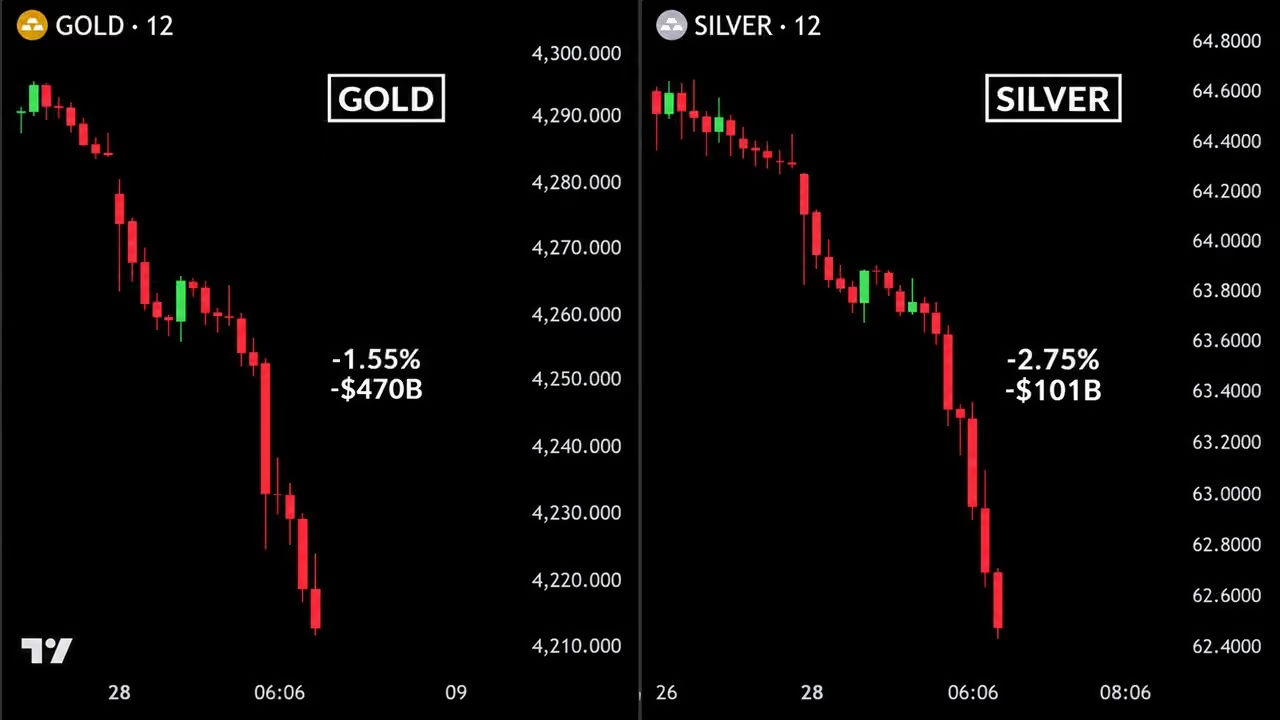
Those moves represented roughly $470 billion in lost gold market value and another $101 billion from silver.
Selling continued into the morning session in India. Comex gold futures were down 2.11% at approximately $4,197.40 per ounce, while silver traded around $62.47 after falling 3.59%.
Gold was also trading almost 25% below its record price of around $5,590, reached on January 28 earlier this year.
Silver experienced the larger percentage decline, consistent with its historically thinner and more volatile market.
Why Did Gold Drop Despite Rising Geopolitical Tensions?
The market had plenty of geopolitical uncertainty to digest.
Once again, gold and silver are being dragged down by rising bond yields. The 10-year is back above 5.2% and the 30-year above 5.5%. The impact of rising yields on the economy, federal budget deficits, and inflation is bullish for gold and silver. Buy now https://t.co/CY02g7N0Nj
— Peter Schiff (@PeterSchiff) September 28, 2026
Iranian Foreign Minister Abbas Araghchi told NBC that Tehran was prepared for a potential “doomsday” conflict if attacked. The comments followed reports that U.S. President Donald Trump was considering renewed strikes against Iran after the midterm elections.
Despite the tensions, investors appeared to direct much of the geopolitical risk premium toward crude oil rather than precious metals.
Brent crude rose 2.52% to around $107 a barrel. Higher oil prices can add to inflation pressures, which can influence expectations for interest rates.
The CME FedWatch Tool showed a 68.1% probability of a 25-basis-point Federal Reserve rate increase in October.
At the same time, the U.S. Dollar Index climbed to 101.39, its highest level in roughly two months. Treasury yields were also elevated, with 10-year and 30-year yields at approximately 5.20% and 5.51%.
Higher yields can weigh on gold because the metal does not generate interest income. As the return available from bonds increases, the opportunity cost of holding non-yielding assets also rises.
Economist and gold advocate Peter Schiff pointed to rising bond yields as one factor behind the sell-off, while arguing that higher yields, deficits and inflation could eventually support precious metals.
Bitcoin Didn’t Provide the Expected Safe Haven
Bitcoin also struggled during the sell-off.
The cryptocurrency fell to an intraday low of $82,780, representing a decline of roughly 2.7% during the same period when gold and silver were falling. BTC later recovered above $83,000.
The move is notable because Bitcoin is often described as “digital gold.” That narrative suggests Bitcoin could attract capital when investors become less confident in traditional financial assets.
Monday’s price action showed a different relationship.
Tokenized gold also declined. PAX Gold (PAXG), which is backed by physical gold, fell from roughly $4,276 to $4,186 during the session. That meant investors holding gold through blockchain-based tokens experienced a decline similar to those holding conventional gold exposure.
Institutional Demand Hasn’t Prevented the Pullback
The weakness came despite strong recent demand from U.S. spot Bitcoin ETFs.
Those products recorded approximately $2.39 billion in inflows last week, making it their strongest weekly inflow total of 2026. Bitcoin had also moved back toward $85,000 over the weekend.
That momentum faded as bond yields moved higher.
Bitwise has previously pointed to a similar pattern in institutional behavior. While some investors may view Bitcoin as comparable to gold over the long term, institutions can still trade it more like a technology or growth asset.
That distinction matters when financial conditions tighten. Rising yields can reduce demand for both growth-oriented assets and traditional non-yielding stores of value, leaving Bitcoin exposed to the same macro pressures affecting other risk assets.
