


Polymarket is expanding its prediction-market lineup into the Pokémon collectibles space, giving traders a way to speculate on whether selected cards and sealed products will rise or fall in value.
The new contracts use ungraded card prices from Collectr, a collectibles-tracking and pricing app. More than a dozen Pokémon-related markets are currently available, with additional contracts expected to appear as existing ones expire and settle.
A New Way to Trade Pokémon Prices
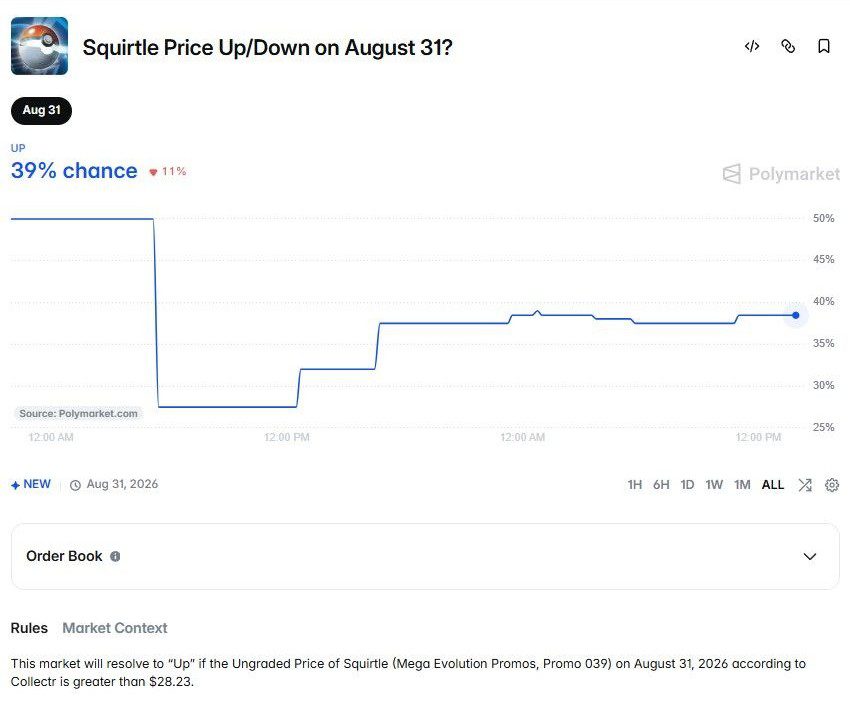
The Squirtle contract illustrates how the markets operate. Traders can take an up or down position on whether the ungraded Mega Evolution Promos card No. 039 finishes above $28.23 on August 31. The upside is currently priced at 39%, down from roughly even odds when the market launched.
🚨 NEW POLYMARKET: Squirtle Price Up/Down on August 31?https://t.co/MMhzRl7iVe
— Polymarket (@Polymarket) August 16, 2026
Polymarket promoted the new contracts on X, with markets covering several high-profile Pokémon cards.
The lineup includes Charizard ex, Pikachu ex, Mega Gengar ex, and Bulbasaur. Sealed products are also represented, including booster boxes and the Celebrations Ultra Premium Collection.
Market sentiment has generally tilted negative. Celebrations, for example, are priced at only a 22% for an increase, while Bulbasaur is a notable exception at 64%. Mega Gengar ex has attracted the most trading activity so far, with approximately $2,300 in volume.
The launch comes as the Pokémon secondary market shows signs of cooling. Buyers have shifted attention toward newer releases in recent weeks, while some older products have faced downward price pressure. That volatility creates the type of short-term price movement prediction markets can monetize.
Still, trading activity remains modest. Most Pokémon contracts have generated only hundreds or a few thousand dollars in volume, tiny compared with the enormous weekly turnover Polymarket can see from political and crypto-related markets.
Prediction Markets Expand Beyond Traditional Events
Polymarket has spent 2026 broadening its focus beyond elections, politics, and cryptocurrency. Its growing collectibles offering includes markets tied to CryptoPunks, Pudgy Penguins, and Banksy artwork, alongside other culture-related contracts.
The Pokémon markets fit naturally into that strategy. Card prices are publicly observable, fluctuate frequently, and attract a large retail audience that overlaps with the crypto community. Those characteristics make collectibles relatively straightforward to turn into recurring prediction markets.
The expansion also comes as regulators pay closer attention to prediction platforms. As these services move into more consumer-facing categories, questions about whether they function more like financial markets, sportsbooks, or something in between are becoming harder to avoid.
For Pokémon collectors, however, the bigger question is whether speculation will translate into sustained trading. Collectors already have access to free price-tracking tools, meaning Polymarket must convince users that wagering on those price movements offers enough value to justify the additional friction of funding a crypto wallet.
For now, the Pokémon markets appear to be an experiment rather than a major new source of volume. But if activity increases as contracts expire and new ones replace them, Polymarket could establish a collectibles category that generates fresh trading opportunities every few weeks, not just during major political or sporting events.
