


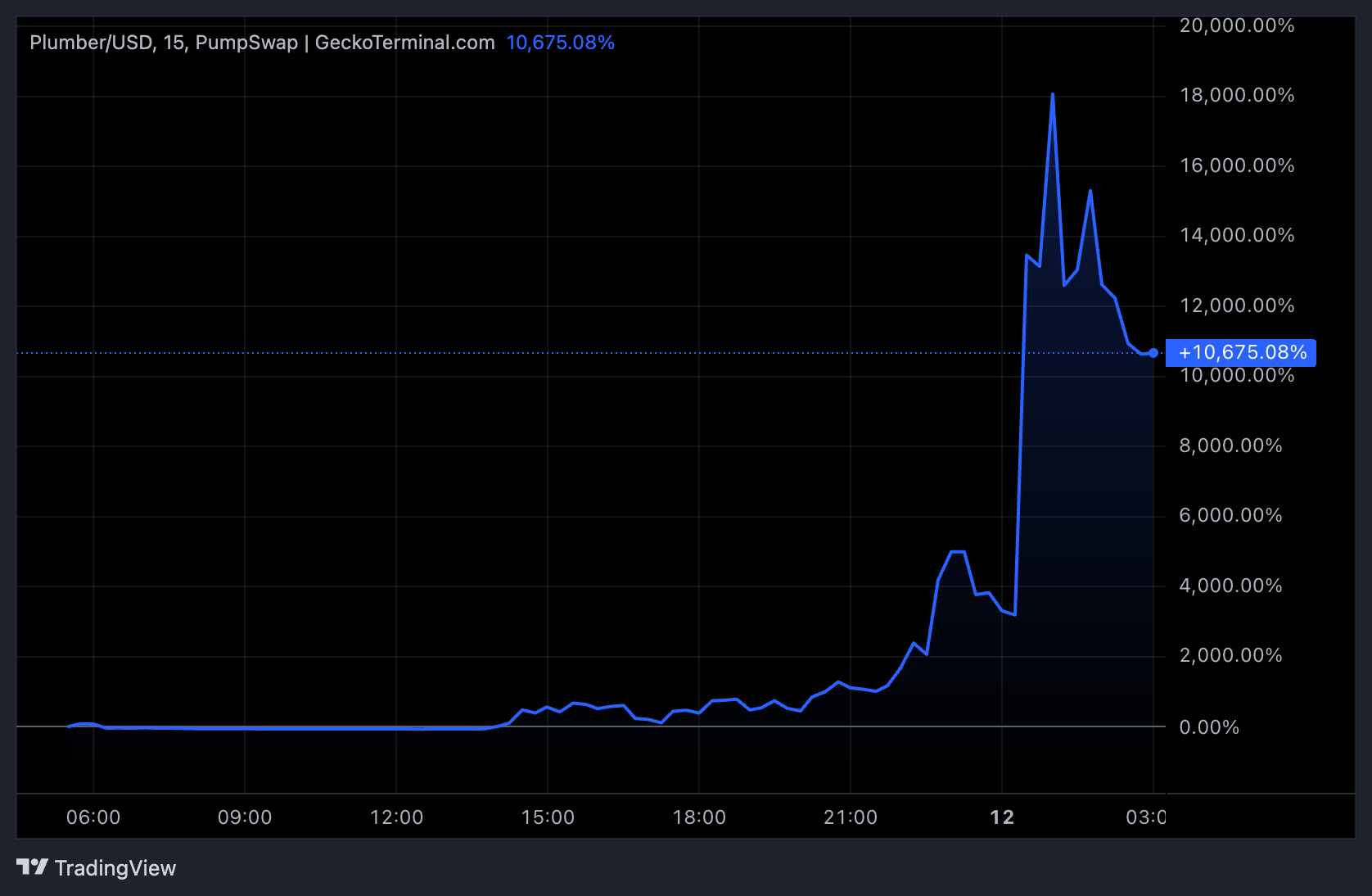
A heated debate on Crypto Twitter has sparked an unlikely market frenzy, with a meme coin named PLUMBER gaining more than 10,000% shortly after launch.
The token initially started with a sub-$1 million market cap before climbing past $5 million on its first day. Although it later retreated, PLUMBER continued trading at a valuation in the multimillion-dollar range.
From Crypto Debate to Meme Coin
According to crypto analyst Stitch, the story began with a discussion about the early days of cryptocurrency trading.
Trader Frank DeGods argued that some veteran traders had benefited from competing against less sophisticated market participants, whom he referred to as “plumbers.”
crypto oldheads were trading against plumbers
— Frank (@frankdegods) August 11, 2026
Crypto commentator Threadguy expanded on the argument, suggesting that successful traders from the 2017–2019 era may have benefited from an easier competitive environment.
Trader Ansem disagreed. He pointed to the extreme volatility of those years, including scams, liquidations, failed projects, and tokens that eventually lost almost all of their value.
The disagreement evolved into a running crypto Twitter narrative commonly described as “oldheads versus plumbers.”
Someone eventually turned the joke into a tradable asset.
solana:GCa9TZMK9Q3VUSkhZgX76YAQBjqQd1dPxkBnZojFpump is blowing up on CT, fuelled purely by meme culture.
HOW DID IT START?
According to meme researcher @stitchdegen, it began when @FrankDeGods joked that “crypto oldheads were trading against plumbers.”
Threadguy and Ansem…
— BeInCrypto (@beincrypto) August 12, 2026
A developer launched the PLUMBER token, effectively converting the viral conversation itself into a meme-coin narrative. Moonshot subsequently verified the token.
Social Attention Becomes the Catalyst
PLUMBER’s rapid rise appears to have been driven largely by online attention rather than an underlying product or technological breakthrough.
Trading volume reportedly reached around $14.2 million as the meme spread through crypto communities and social media. Several recognizable accounts also helped increase its visibility, while individual traders began buying the token.
That produced the familiar meme-coin cycle:
viral narrative → social engagement → increased trading → greater visibility → more buyers.
As attention increased, so did liquidity and speculation, helping push the price dramatically higher.
But these moves can reverse just as quickly.
Recent meme coins have demonstrated how quickly social momentum can disappear. Cash Cat (CASHCAT), for example, reportedly gained roughly 4,000% over a week in July before losing steam.
https://t.co/IEXcHgJhR0 pic.twitter.com/fAm5rkwvnF
— Raydium (@Raydium) August 12, 2026
Another example is Coinbase Man (BRIAN), which reportedly surged from a market cap below $1 million to approximately $37 million after Coinbase CEO Brian Armstrong changed his profile picture. When the profile picture was restored, the token subsequently lost around 90% of its value.
The Biggest Risk: Momentum Fades
PLUMBER faces a similar challenge: its valuation is heavily tied to the popularity of the meme.
Stitch noted that the token’s setup could deteriorate quickly if the online narrative loses momentum while additional supply enters the market. In that scenario, selling pressure could arrive at precisely the moment new buyers stop appearing.
For now, PLUMBER remains a pure example of how quickly a social-media narrative can become a speculative crypto asset.
The bigger question is whether the developers eventually give the project a purpose beyond the joke—or whether PLUMBER ultimately becomes another meme coin whose biggest asset was simply attention at the right moment.
