


While much of the crypto market struggled over the past year, one segment moved in the opposite direction: tokenized real-world assets (RWAs).
Between June 2025 and June 2026, tokenized assets expanded by 267%, becoming the only crypto category to increase its overall market value during a period when most sectors declined. The surge was not primarily caused by asset price appreciation. Instead, growth came from the creation of new tokenized products, with gold-backed assets and tokenized equities leading the expansion.
Tokenized Gold Expanded Beyond Price Gains
Gold played a major role in the sector’s rise, but price appreciation alone does not explain the growth.
According to CryptoRank data, gold prices climbed by roughly 20% during the period. However, the amount of gold represented on-chain nearly doubled, increasing from around 524,000 ounces to more than 1 million ounces. This suggests that the market’s expansion was driven largely by new issuance of gold-backed tokens rather than simply higher gold prices.
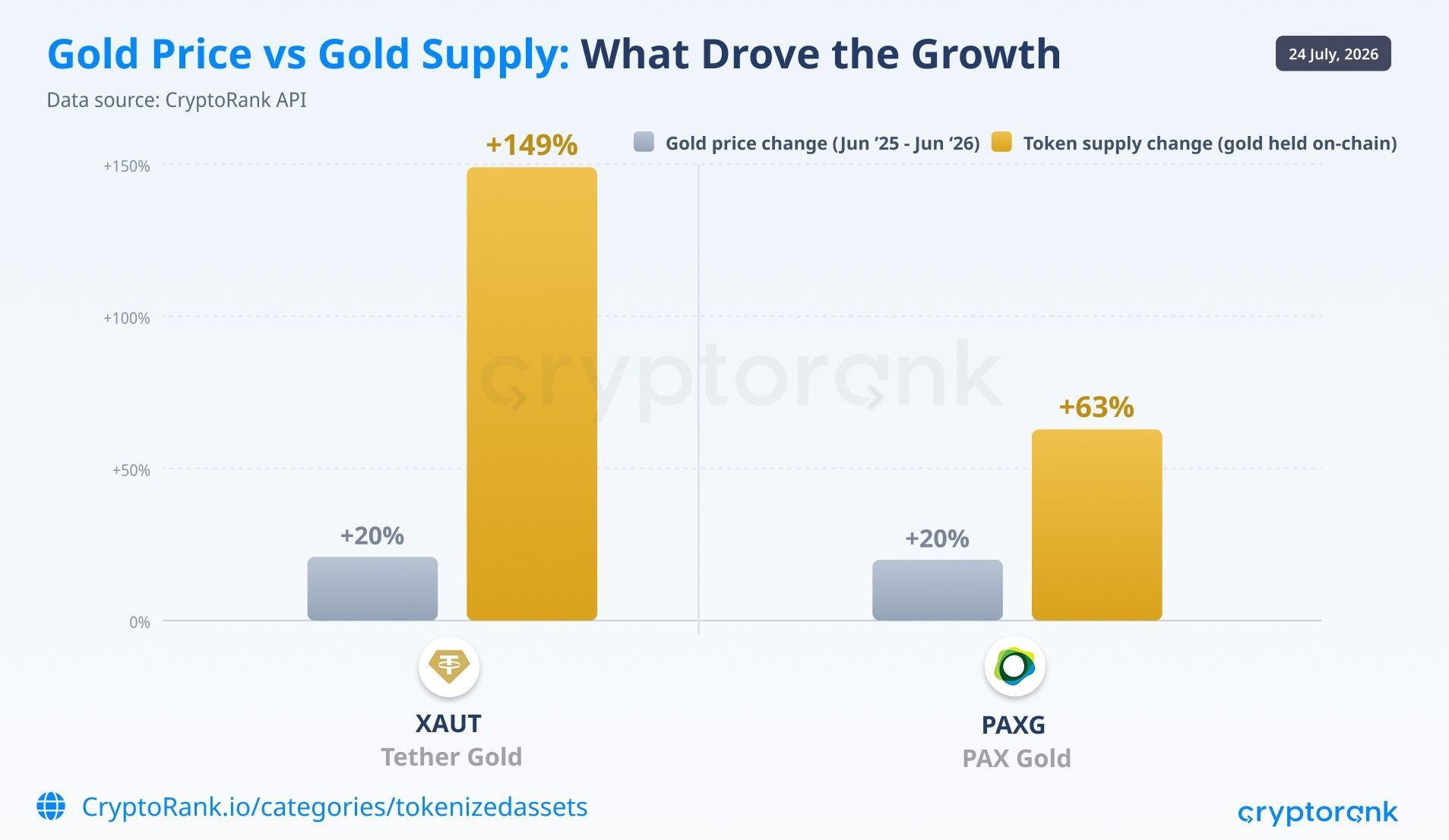
A year earlier, precious metals dominated the tokenized asset market, representing almost the entire publicly traded segment. Tokens such as Tether Gold (XAUT) and PAX Gold (PAXG) accounted for most of that value.
By June 2026, however, gold’s dominance had weakened. Precious metals represented about 68% of the sector as new categories entered the market and diversified the tokenization landscape.
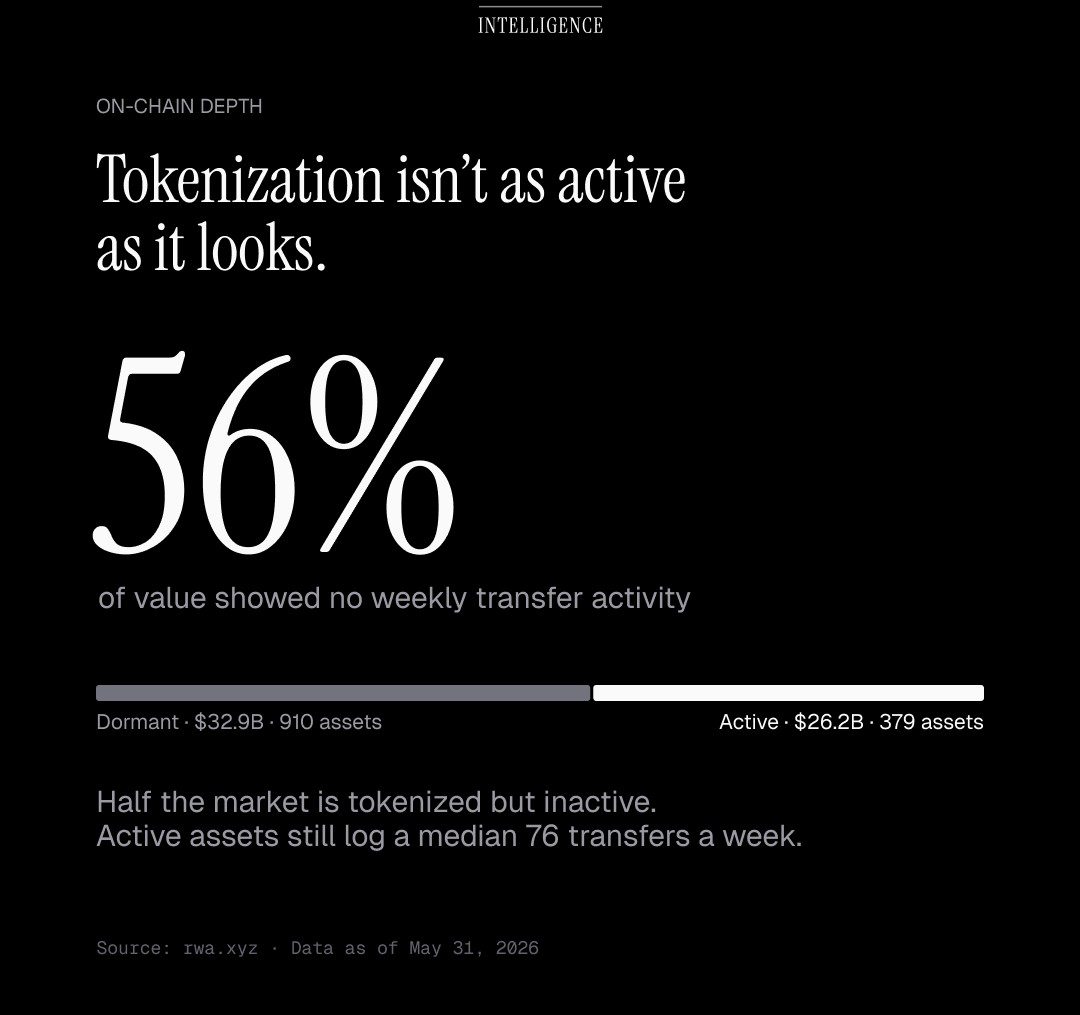
BeInCrypto’s Real State of Tokenization in 2026 report similarly highlighted rapid growth in real-world asset tokenization, tracking nearly $60 billion in tokenized assets across more than 7,000 products and 12 asset categories. The report noted that while headline valuations are increasing quickly, actual on-chain usage remains significantly smaller.
Tokenized Equities Created a New Market
The biggest structural shift came from tokenized stocks and exchange-traded funds (ETFs).
A year earlier, equity tokens were essentially absent from the sector. By June 2026, they represented 23% of tokenized assets as platforms began bringing traditional shares onto blockchain networks. Treasuries and private credit products accounted for much of the remaining market.
Several issuers drove this growth. By token count, rStocks and Ondo accounted for a significant share of tokenized equity offerings. Their products covered individual companies, including major technology firms, as well as broader index-based investments.
Crypto exchanges also moved into the space. Binance introduced its bStocks product in June 2026, while Gate launched gStocks shortly afterward, accelerating competition in tokenized securities.
Issuance, Not Speculation, May Define 2026
While tokenized assets expanded, other crypto categories faced sharper declines. Meme coins, decentralized physical infrastructure networks (DePIN), and blockchain infrastructure were among the hardest-hit sectors during the same period.
CryptoRank also identified tokenized assets as the most frequently listed category on centralized exchanges during the first half of 2026. That trend indicates that continued product launches and new issuance could play a larger role than price movements in determining the sector’s future growth.
How Crypto Sector Capitalizations Changed Over One Year
While the capitalization of most sectors declined, Tokenized Assets grew 267%. Where do you think the growth came from? The answer in our full story 👇 pic.twitter.com/rTnq2FiqLf
— CryptoRank.io (@CryptoRank_io) July 25, 2026
The shift marks a broader change in crypto’s narrative: growth is increasingly coming from bringing traditional assets like gold and equities onto blockchain networks rather than from purely speculative digital assets.
