


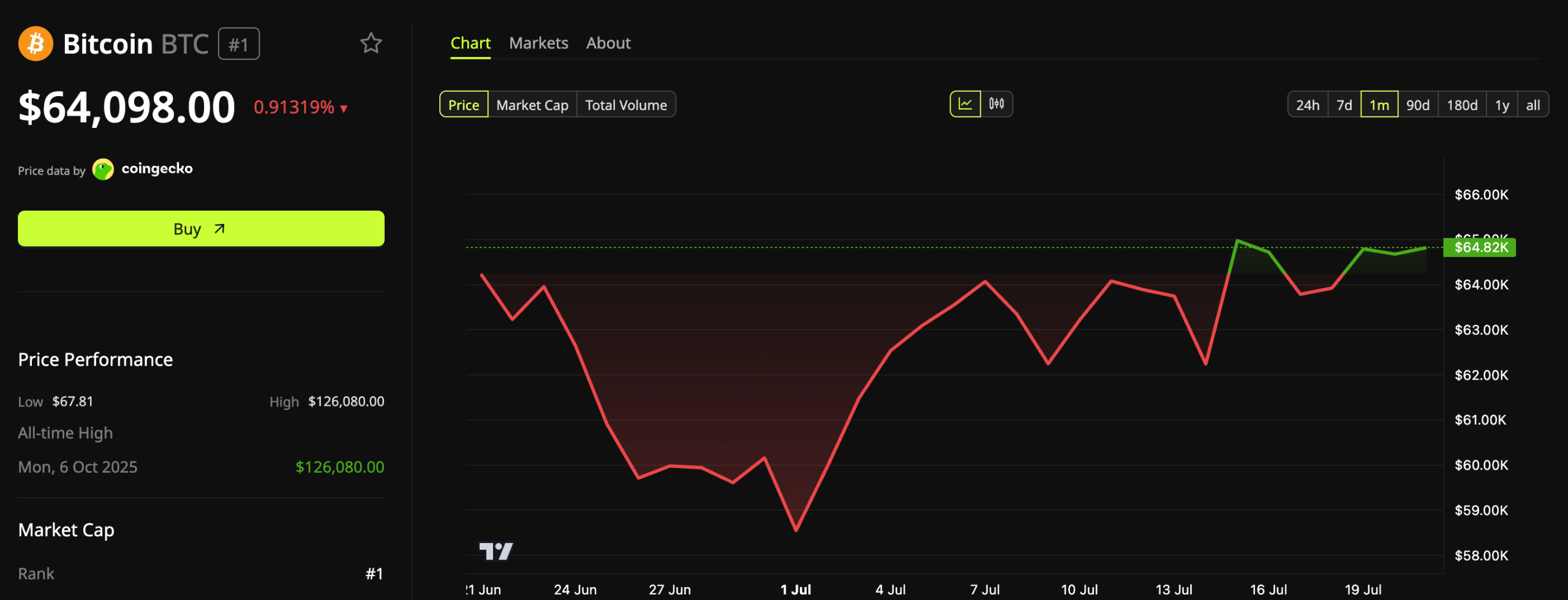
Bitcoin (BTC) has posted a modest rebound over the past week, gaining roughly 2% and trading around $64,000. Despite the recovery, several on-chain indicators continue to point toward a cautious outlook for the remainder of July.
Broader macroeconomic uncertainty has also weighed on sentiment. Ongoing U.S. military strikes targeting Iran have pushed oil prices higher, reinforcing a risk-off environment that has pressured cryptocurrencies alongside other risk assets.
1. Falling Stablecoin Balances on Exchanges
One of the clearest warning signs is a decline in stablecoin reserves on major exchanges. Stablecoins often represent buying power waiting to enter the crypto market.
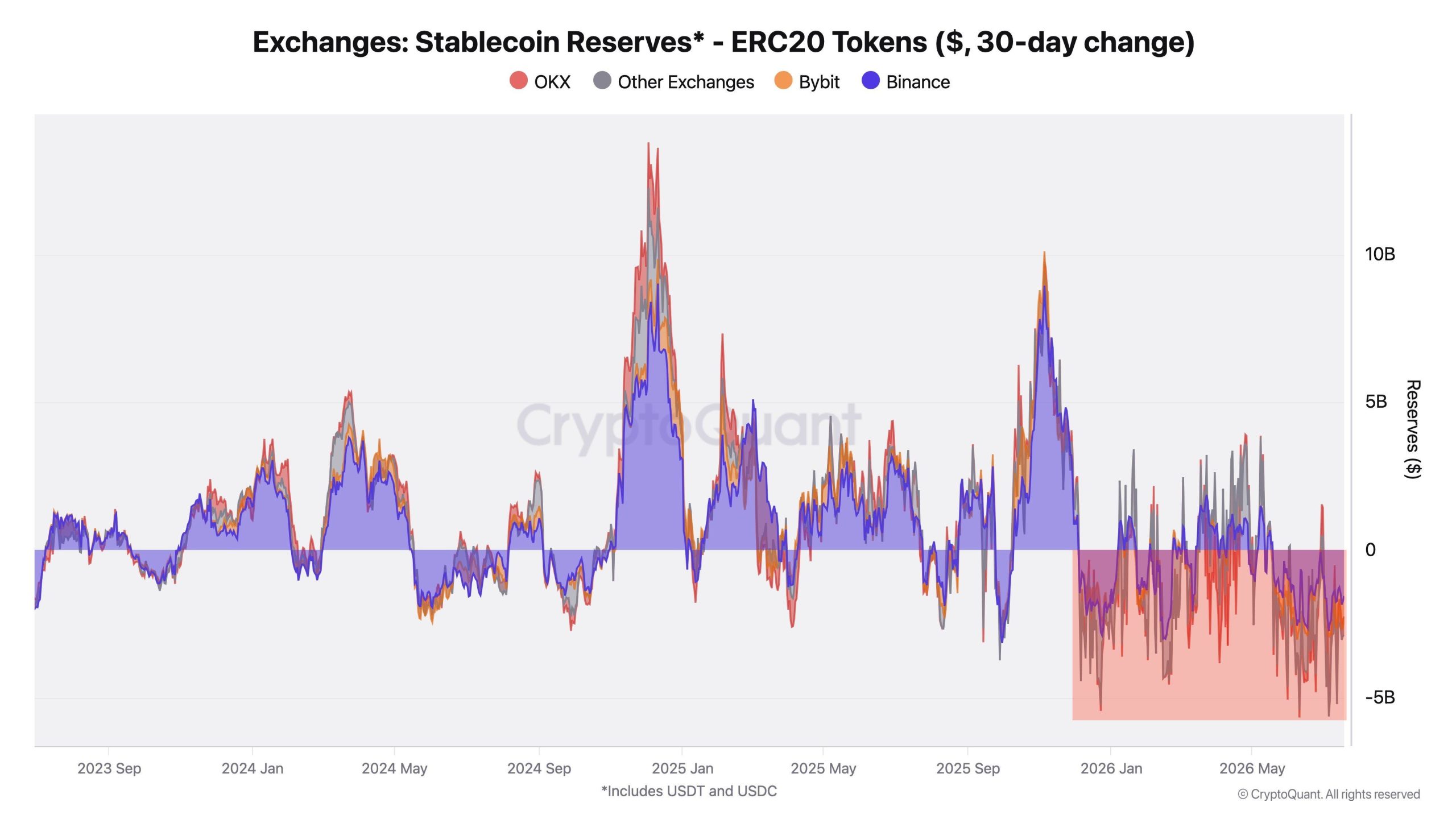
According to on-chain analyst Darkfost, approximately $2.3 billion in stablecoins has been withdrawn from Binance and Bybit over the last 30 days. The outflows suggest traders are moving funds away from exchanges instead of keeping them ready for purchases, potentially reducing near-term liquidity and demand.
Darkfost argues that this cautious positioning is limiting Bitcoin’s ability to break decisively above its current consolidation range.
2. Coinbase Premium Remains in Negative Territory
Another bearish signal is the Coinbase Premium Index, which has stayed below zero since early May and is currently around -0.062.
A negative reading generally indicates Bitcoin is trading at a discount on Coinbase compared with other global exchanges. This is often interpreted as weaker buying activity from U.S. investors, including institutional participants.
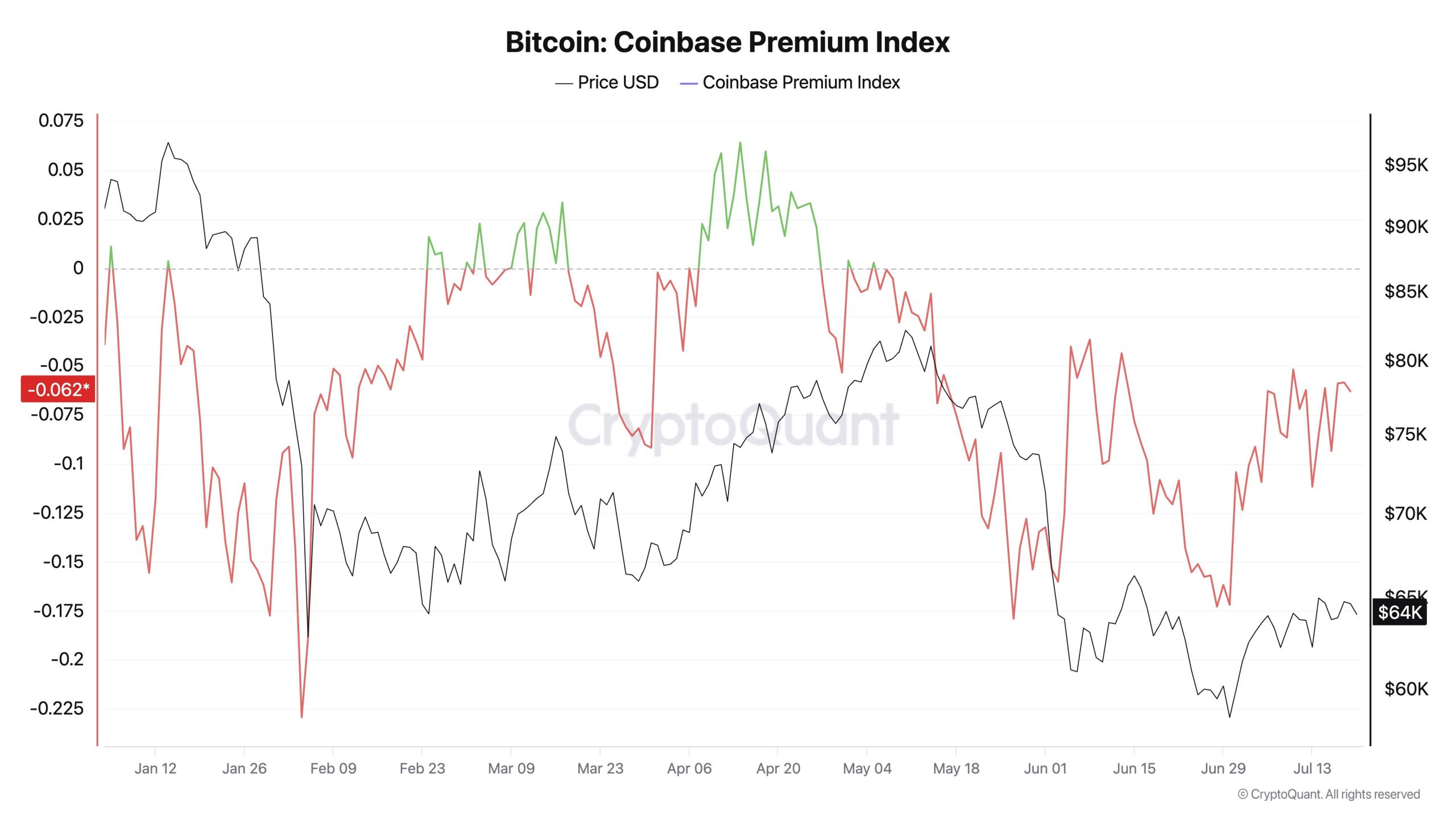
The persistent negative premium suggests that institutional demand has yet to recover, even as Bitcoin has attempted to stabilize.
3. Recent Buyers Continue Selling at Losses
Selling pressure is also evident among investors who purchased Bitcoin closer to previous highs.
Darkfost reports that holders who accumulated BTC between $75,000 and $126,000 over the past six to eighteen months are increasingly realizing losses. On average, this group currently holds about 2,450 BTC on exchanges at a loss, while monthly realized losses have climbed to roughly $90 million, marking a record level.
🔴 LTHs are in the red, they’re currently realizing more losses than profits according to their SOPR.
—💡The Spent Output Profit Ratio is a metric that calculates the realized profit/loss ratio when a UTXO is spent.
In this chart, only LTH UTXOs are counted. —💥 In early… pic.twitter.com/rruHxyjbfJ
— Darkfost (@Darkfost_Coc) July 20, 2026
The same trend has also appeared among long-term holders across the market.
Some market participants interpret record realized losses as a sign that sellers may be nearing exhaustion, which can sometimes precede a market bottom. However, Darkfost believes the data instead reflect a bear market that remains well established.
Overall, while Bitcoin has managed a short-term recovery, weakening exchange liquidity, subdued institutional demand, and continued loss-taking among recent buyers suggest that bullish momentum remains limited in the near term.
