


A newly released survey from Bank of America suggests that sentiment toward the U.S. dollar has turned sharply negative, reaching its most pessimistic level in years. The survey shows investors holding record-high short positions against the dollar, signaling widespread expectations of further weakness and heightened volatility ahead.
Dollar Positioning Reaches Extreme Levels
According to Bank of America’s latest FX and rates sentiment data, exposure to the U.S. dollar has fallen to historic lows. Investors are increasingly positioning for downside, reflecting a growing belief that the dollar’s best days may be behind it. This marks the most bearish positioning seen in roughly a decade.
Market participants are also beginning to view the dollar less as a stable reserve currency and more as a vehicle for volatility. Shifting expectations around monetary policy, uncertainty surrounding U.S. fiscal decisions, and questions about the Federal Reserve’s independence are all adding pressure. Political factors, including concerns raised during Donald Trump’s presidency, continue to weigh on confidence in U.S. institutions.
Labor Market Weakness Adds to Pressure
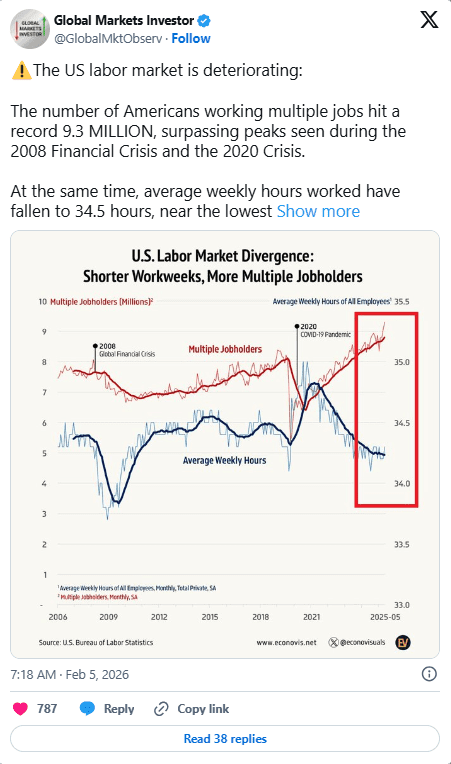
The survey further points to deterioration in the U.S. labor market as a potential catalyst for additional dollar weakness. A record number of Americans are now working multiple jobs, while average weekly hours have dropped close to levels last seen during major economic crises. This combination suggests that many workers are supplementing income out of necessity rather than choice, highlighting underlying fragility in employment conditions.
Largest Shift in Sentiment Since 2012
Bank of America notes that this represents the most significant swing toward bearish dollar sentiment since early 2012. As speculative positions against the currency continue to rise, traders appear increasingly convinced that the U.S. dollar could face sustained downside pressure in the near future.
