


At a technology-focused gathering in Moscow, Russian President Vladimir Putin outlined a proposal for BRICS nations to pursue a shared bioeconomy strategy aimed at reducing reliance on Western technologies. Speaking at the Future Technologies Forum, Putin framed the bioeconomy as a long-term growth model that could redefine industrial independence by the middle of the century.
According to Putin, BRICS countries already possess many of the natural and scientific resources needed to lead in this sector. He described bio-based industries as a “new reality” for global development and invited member states to collaborate on cross-border projects that could strengthen economic sovereignty. Russia, he said, is prepared to partner with other BRICS nations to accelerate progress in this field.
What the Bioeconomy Means for BRICS
The bioeconomy vision centers on three major areas of cooperation: food systems, healthcare, and energy. In agriculture, the focus would be on crop resilience and food security. In medicine, advanced treatments such as artificial organs, bionic prosthetics, and genetics-driven therapies are seen as high-growth opportunities. Energy applications would include biofuels and biomimetic technologies designed to reduce dependence on fossil fuels.
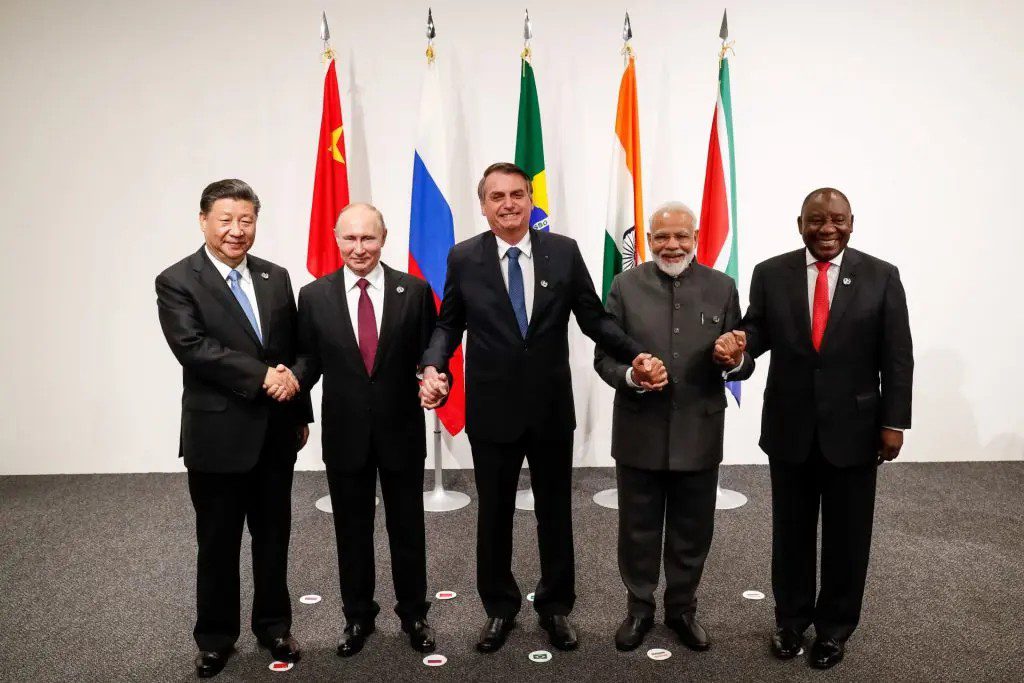
The strategy also encompasses intellectual property in fields like synthetic biology and AI-supported bio-manufacturing. Putin has suggested rolling out these technologies across the expanded BRICS bloc, which now includes countries such as the UAE and Egypt. Collectively, BRICS aims to capture a significant share of the biotech market, which analysts believe could account for 15–20% of global economic output by 2030.
Further discussions in this direction are expected at the 2026 BRICS summit in India.
A $30 Trillion Industry in the Making
Global bioeconomy forecasts suggest the sector could grow to roughly $6.3 trillion by 2035 and expand dramatically thereafter, potentially reaching $30 trillion by 2050. Rising demand for sustainable food, advanced healthcare, and cleaner energy sources is expected to fuel this growth over the next several decades.

By positioning itself early, BRICS hopes to gain a competitive edge over Western economies that are also investing heavily in biotechnology. Supporters of the plan argue that early coordination could allow the bloc to dominate emerging markets such as medical tourism, particularly as healthcare costs and insurance disputes continue to challenge providers in the United States.
If successful, leadership in biotech could help BRICS economies become more self-reliant and less vulnerable to external pressure, including economic sanctions. China is widely expected to align with Russia on this strategy, given their shared interest in reducing Western dominance in key technologies.
Implications for the Dollar and Global Finance
One potential outcome of a BRICS-led bioeconomy is a shift away from dollar-based trade. Biotech goods and services could increasingly be settled in local currencies rather than the US dollar, reinforcing gradual de-dollarization. Such a move could have downstream effects on institutions like the Federal Reserve and the broader U.S. Treasury market.
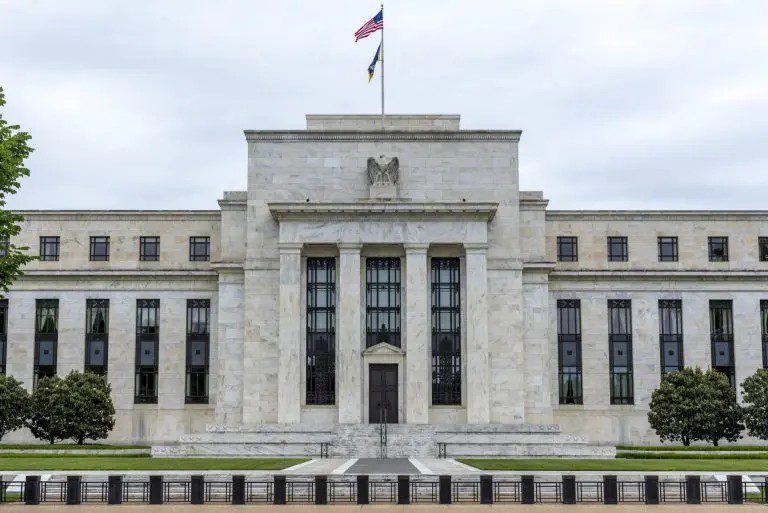
Proponents see this approach as lower risk than launching a new shared currency while still offering long-term rewards. Instead of focusing solely on monetary reform, upcoming BRICS meetings, including the 18th summit in New Delhi, may emphasize how bio-based industries can organically strengthen local currencies and trade networks.
With the West already competing in biotech, BRICS is moving quickly to avoid falling behind. Should additional major economies, such as Saudi Arabia, join the bloc in the future, the economic impact of this strategy could grow even further.
