


Bitcoin (BTC) has dropped back to the $68,000 range after once again failing to break above the $74,000 level. Over the past month, the cryptocurrency has repeatedly tested resistance between $73,000 and $74,000 but has not managed to sustain a breakout.
Data from CoinGecko shows that BTC has declined 4.1% over the last 24 hours and is down 4.7% over the past month. Since March 2025, the asset has fallen about 22.1%. Despite this broader pullback, Bitcoin has still posted modest short-term gains, rising 3.1% over the past week and 0.5% in the last 14 days.
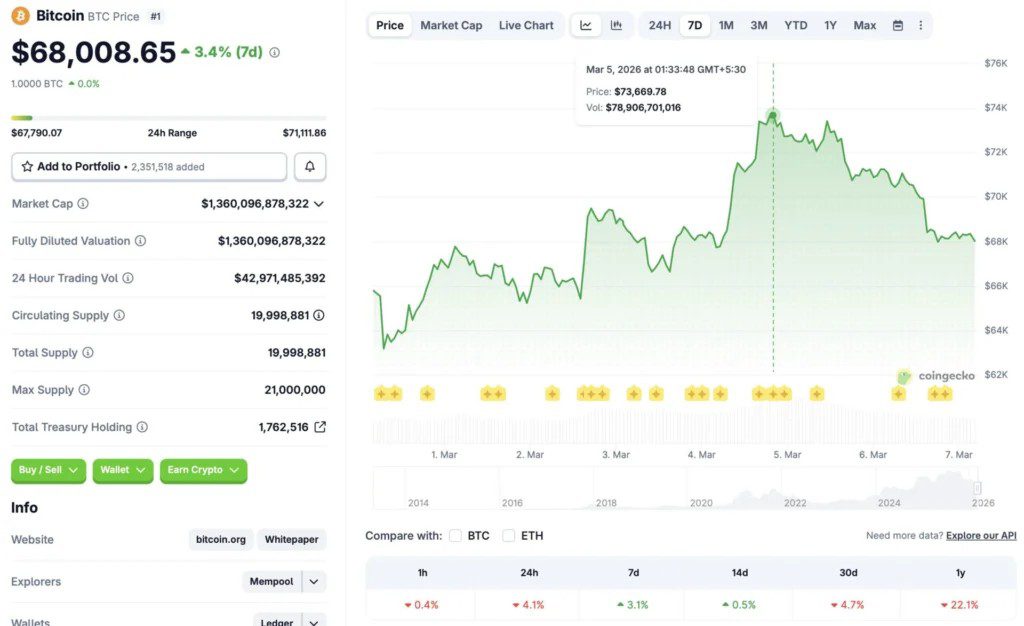
What is the drop from $73K to $68K? Could Signal
The recent downturn may be tied to fresh economic data from the United States. February’s jobs report showed 92,000 fewer positions than expected, while unemployment increased to 4.4%, slightly above the projected 4.3%. At the same time, wages rose by 0.4%.

These mixed signals have raised concerns among investors. When uncertainty increases in the broader economy, higher-risk assets such as cryptocurrencies often face added pressure.
Geopolitical developments are also contributing to market caution. Rising tensions in the Middle East, particularly involving the ongoing conflict between the US, Israel, and Iran, are creating concerns about disruptions in global energy markets. Any instability affecting oil supply could ripple through financial markets and impact investor sentiment.
At the moment, Bitcoin appears to face strong resistance near the $73,000 level. The asset is trading close to its previous all-time high from 2021, which has proven to be a difficult barrier to overcome. A sustained breakout may require improvements in global economic conditions and reduced geopolitical tensions.
Short-Term Outlook for Bitcoin
Some analysts remain optimistic about Bitcoin’s near-term potential. According to projections from CoinCodex, BTC could climb to around $79,358 by March 17, 2026. Reaching that level from current prices would represent an increase of roughly 16.7%.
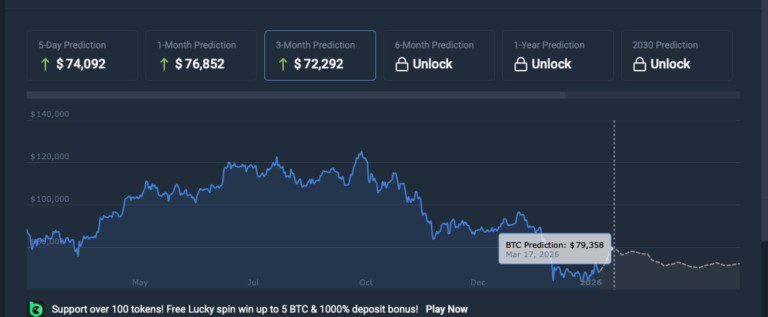
However, the forecast also suggests that Bitcoin may struggle to stay above the $79,000 mark. Analysts expect a gradual pullback afterward, with prices potentially drifting back toward the $70,000 area by early May.
