


Although Bittensor’s long-term outlook has not turned bullish, the current short-term price range may still present trading opportunities.
Over the past month, tokens connected to artificial intelligence within the crypto market have shown relatively strong performance. According to CoinMarketCap data, the sector’s market capitalization increased from around $12.76 billion to roughly $14.42 billion within 30 days.
Much of that growth occurred around mid-February.
During that period, TAO surged nearly 50% in about five days, but the gains did not last. Since then, the token’s short-term momentum has weakened.
Market sentiment signals potential downside
Data from Coinalyze indicated that open interest rose about 6% over the last 24 hours.
Most of that increase occurred as Bittensor (TAO) climbed toward the $200 level on Saturday, March 7. However, the move lacked strong buying support.
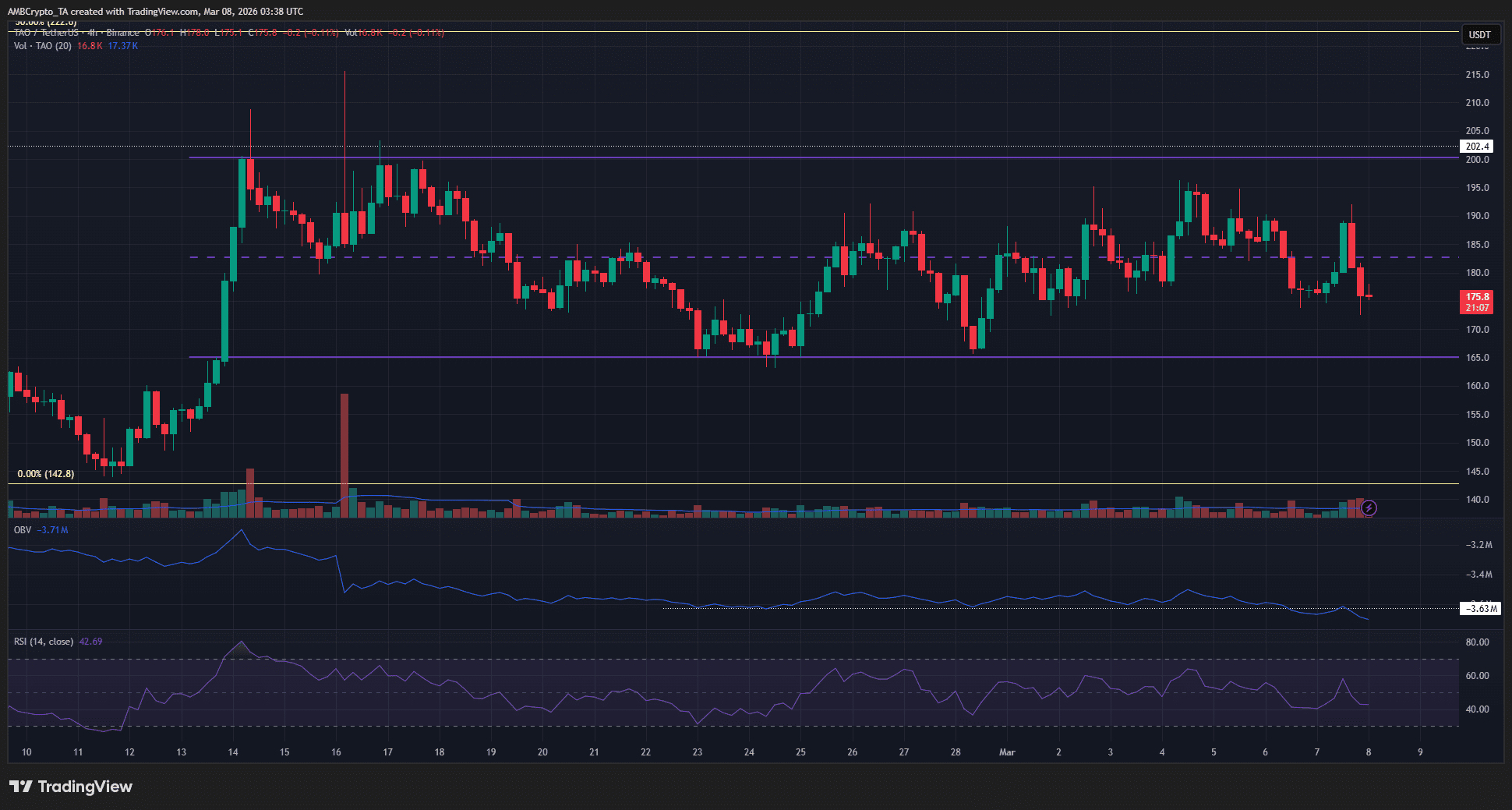
The Spot CVD has declined during the past week, and funding rates have largely remained negative throughout March. These indicators suggest weak demand and a cautious or bearish outlook among traders in the short term.
Range trading dominates TAO’s price action
Beyond the immediate bearish signals, TAO has been moving inside a defined range since mid-February.
The range boundaries sit approximately between $165 and $200.
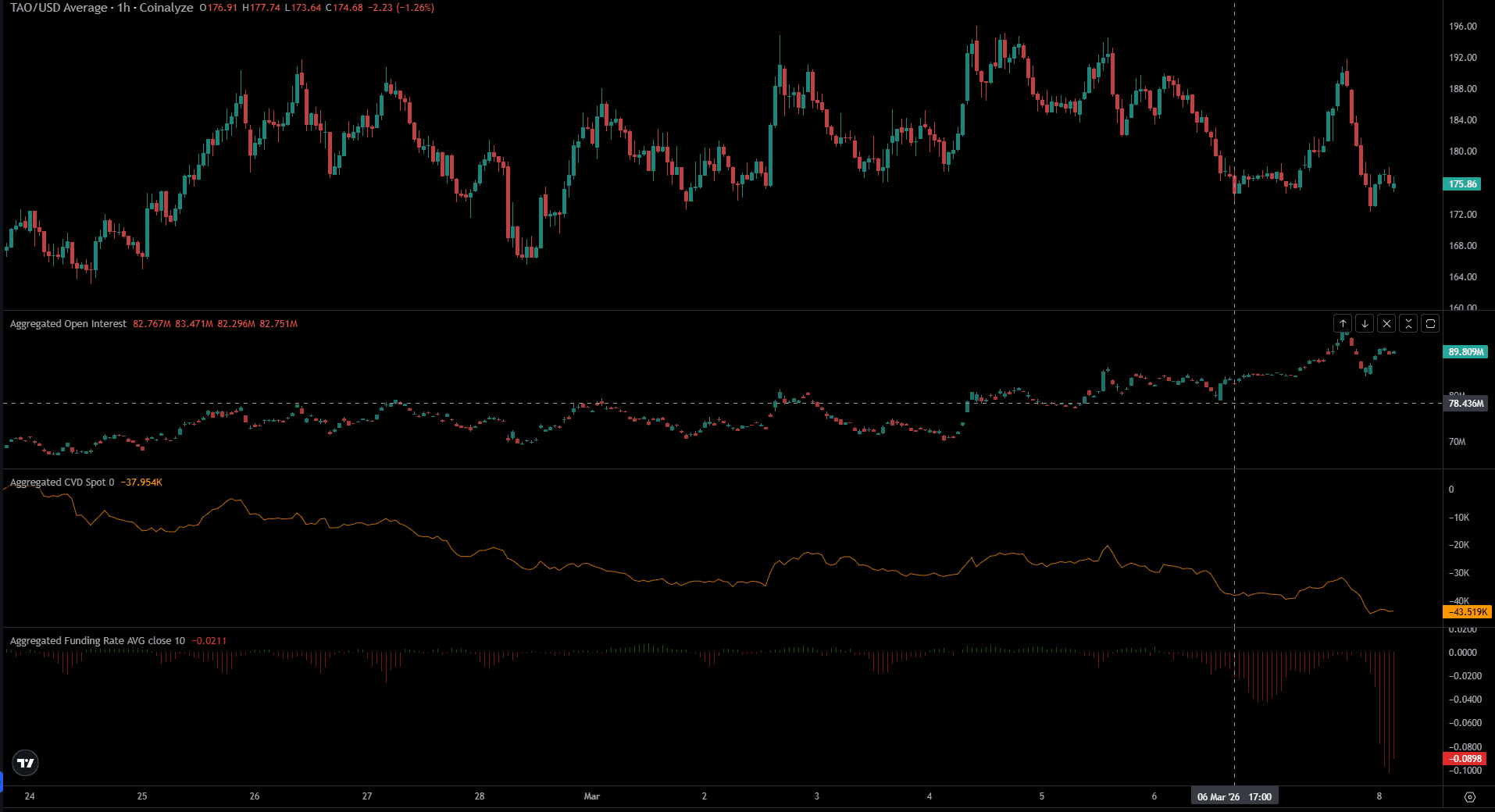
At the time of writing, price momentum appears negative. The On-Balance Volume (OBV) has dropped below a nearby support level, which signals increasing selling pressure.
Combined with Bitcoin falling back under $70,000, TAO may be moving toward the lower boundary of the range near $165.
Traders may focus on the range extremes
A liquidation heatmap covering the past month shows that the upper and lower ends of the range attract the most liquidity.
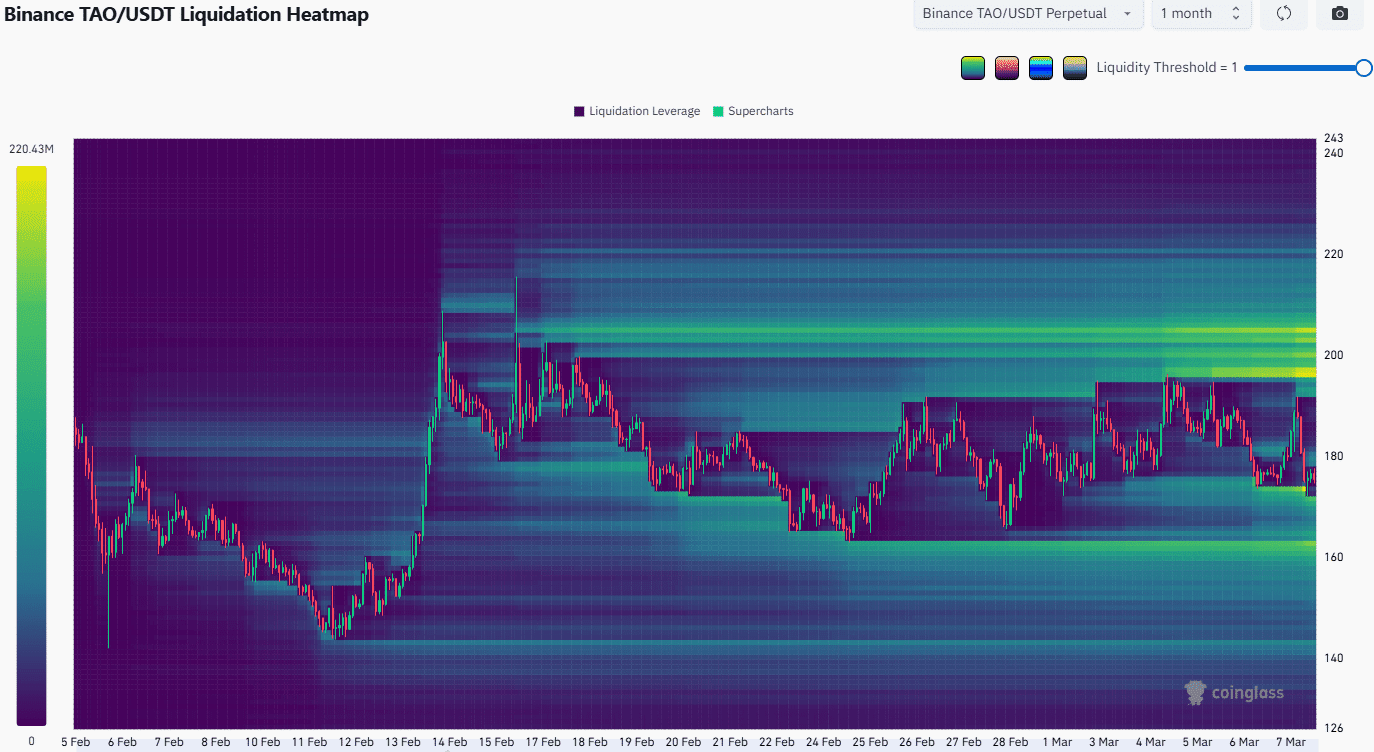
This places $160–$165 as a potential buying area and around $200 as a possible selling zone.
While the broader trend for TAO still leans bearish, short-term traders may continue using this range strategy until a clear breakout occurs.
Summary
TAO’s attempt to push toward $200 was quickly rejected.
Indicators such as negative funding rates and declining spot CVD point to short-term bearish sentiment.
The $165 level could be the next key price area if the current weakness continues.
Disclaimer: This content is for informational purposes only and reflects the author’s perspective. It should not be considered financial or investment advice.
