


Growing geopolitical tensions during the first week of March have pushed investors toward safer assets, helping the US dollar gain strength while many global markets struggle. Stocks in several regions and even traditional safe assets like precious metals have experienced downward pressure.
Market analysts say that if the current environment continues, it could limit the amount of capital flowing into riskier investments such as Bitcoin and other cryptocurrencies.
Safe-Haven Demand Drives the Dollar Higher
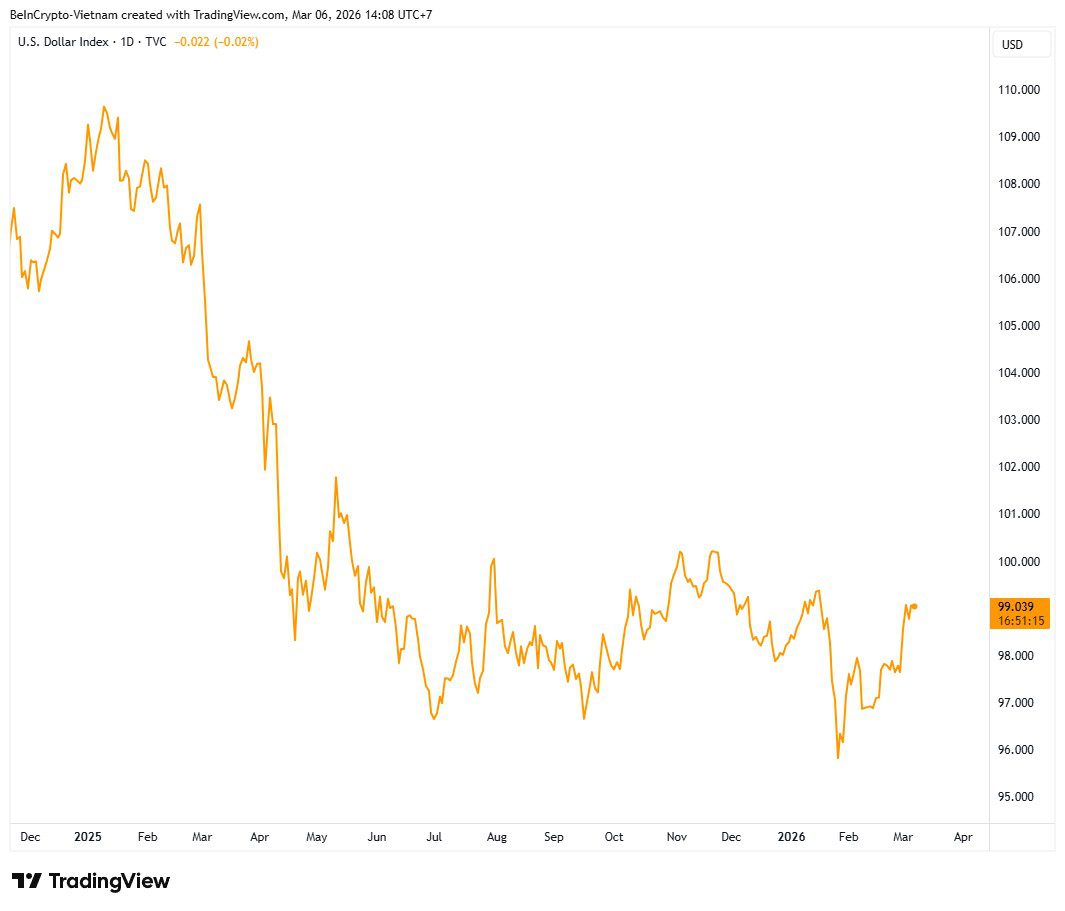
Throughout 2025 and the beginning of 2026, the US dollar weakened considerably. The US Dollar Index (DXY) dropped sharply and reached roughly 96 in January 2026, its lowest level in about four years.
Experts linked the decline to several factors, including expectations that the Federal Reserve would eventually reduce interest rates. Uncertainty surrounding economic policies under President Donald Trump, particularly discussions about the Fed’s independence and trade strategies, also played a role. In addition, many countries have been gradually diversifying away from heavy reliance on the US dollar.
Recently, however, the situation has shifted.
In early March 2026, the dollar began strengthening again as tensions escalated in the Middle East. Data from market tracking platforms shows the DXY rising from around 97.8 to above 99 within the same week.
Reports from global financial media indicate that geopolitical risks are encouraging investors to move money into the US dollar as a protective asset. If instability persists, analysts believe the dollar could continue climbing in the near term.
Market strategist Tony Sycamore from IG noted that ongoing conflict in the Middle East could sustain inflationary pressure, strengthen the US dollar, and significantly reduce the likelihood that the Federal Reserve will lower interest rates.
Stronger Dollar Could Pressure Bitcoin
A rising dollar can be problematic for Bitcoin because the cryptocurrency often moves in the opposite direction of the USD. When the dollar becomes stronger, investors frequently shift away from higher-risk assets, including digital currencies.
Although Bitcoin 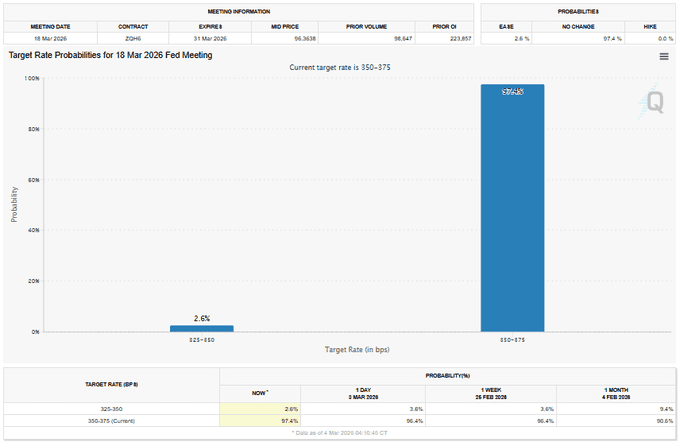 has recently shown a notable recovery despite the tense geopolitical backdrop, several warning signs suggest the rally may face challenges.
One major factor is interest rate expectations. A stronger dollar is often linked to the belief that the Federal Reserve will delay rate cuts. According to data from FedWatch, policymakers are widely expected to keep interest rates unchanged during the March 2026 meeting.
Current projections indicate about a 97% probability that the Fed will maintain its existing range of roughly 3.50% to 3.75%. Expectations that borrowing costs will remain elevated tend to reinforce the dollar’s strength while discouraging investment in risk-heavy assets like cryptocurrencies.
Some market participants have already voiced caution about the changing outlook, noting that shifting Fed expectations signal a more defensive stance among investors.
Institutional Selling Adds More Pressure
Beyond macroeconomic conditions, Bitcoin also faces selling activity from major institutional players.
Galaxy Digital, a prominent crypto investment firm, reportedly sold more than 3,100 BTC in recent days. Analysts suggest the company may be taking advantage of the recent price rebound to lock in profits.
Such actions indicate that some large investors remain skeptical about whether the current market recovery can continue.
Data from the analytics platform CryptoQuant supports this cautious view. Its Bitcoin Bull Score Index is currently around 10 out of 100, a reading that reflects a strongly bearish market environment.
Risk of Another False Breakout
Because of these combined factors, some analysts warn that Bitcoin could repeat a pattern seen earlier in 2026. At that time, the cryptocurrency briefly surged before quickly reversing direction.
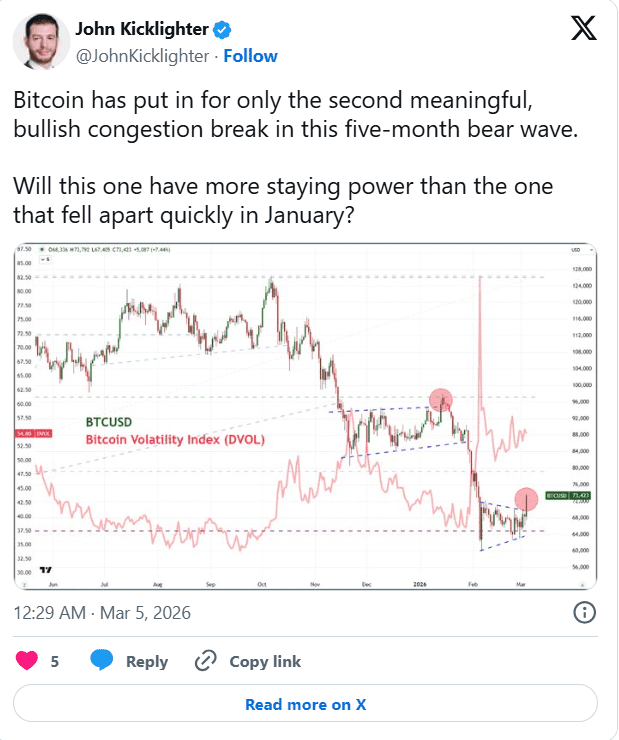
If the US dollar continues strengthening, particularly due to escalating geopolitical tensions, it may overpower the internal momentum currently supporting Bitcoin’s price.
In that scenario, the recent rebound could lose steam and potentially turn into another short-lived breakout rather than the start of a sustained rally.
