



Jan van Eck, CEO of VanEck, believes Bitcoin may be approaching the end of its current downturn. He links the recent weakness to the cryptocurrency’s well-known four-year halving cycle.
That view, however, is not universally accepted. Some analysts question whether Bitcoin’s traditional cycle still plays a dominant role in price movements, suggesting broader macroeconomic forces may now have greater influence.
Why Some See a Bottom Forming
In a recent appearance on Power Lunch on CNBC, van Eck emphasized Bitcoin’s fixed supply of 21 million coins and its programmed halving events as the foundation of its long-term behavior.
According to him, Bitcoin historically follows a repeating pattern: three years of gains followed by a sharp correction in the fourth year. With 2026 representing that fourth year in the current cycle, he argues the market is now experiencing a typical bearish phase. At the same time, he suggested that prices may be stabilizing and forming a base.
Research firm Kaiko has pointed to similar conclusions. In earlier analysis, the firm noted that Bitcoin’s pullback from its peak near $126,000 to the $60,000–$70,000 range mirrors the magnitude of previous bear-market declines. The correction also falls within the historical window when cycle peaks typically occur roughly 12 to 18 months after a halving event.
Even so, history shows that bear markets rarely reverse quickly. In past cycles, Bitcoin often spent six to twelve months carving out a bottom, frequently interrupted by short-lived rallies that ultimately failed before a sustained recovery took hold.
Not Everyone Is Convinced
Matt Hougan, Chief Investment Officer at Bitwise, has also cited the four-year cycle as a factor influencing investor behavior. He believes cyclical expectations contributed to reduced exposure among holders and added to recent price pressure. Like Van Eck, he sees signs that a bottoming process may be underway.
Still, a growing group of analysts disputes the idea that halving cycles remain the primary driver of Bitcoin’s price. They argue that today’s market is increasingly shaped by global liquidity trends, macroeconomic policy, and institutional investment flows, factors that may outweigh mining reward reductions.
Timing the Turnaround
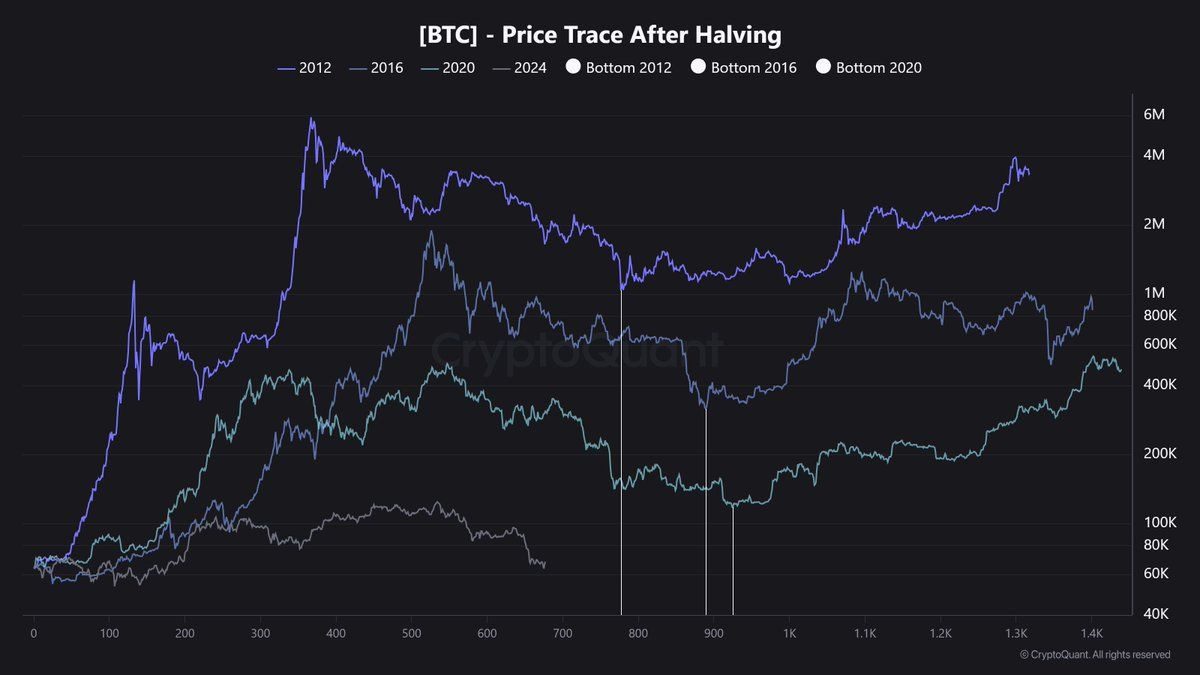
On-chain analytics platform CryptoQuant has cautioned that market bottoms typically take time to form. Drawing comparisons to previous cycles following the April 2024 halving, the firm outlined several possible timelines:
A 2012-style pattern would suggest a bottom around June 2026
A 2016-style structure points to September 2026
A 2020-style comparison implies late October 2026
Based on these models, CryptoQuant estimates the most probable window for a market low could fall between September and November 2026, with a broader range extending from mid- to late 2026.
Recent Price Action
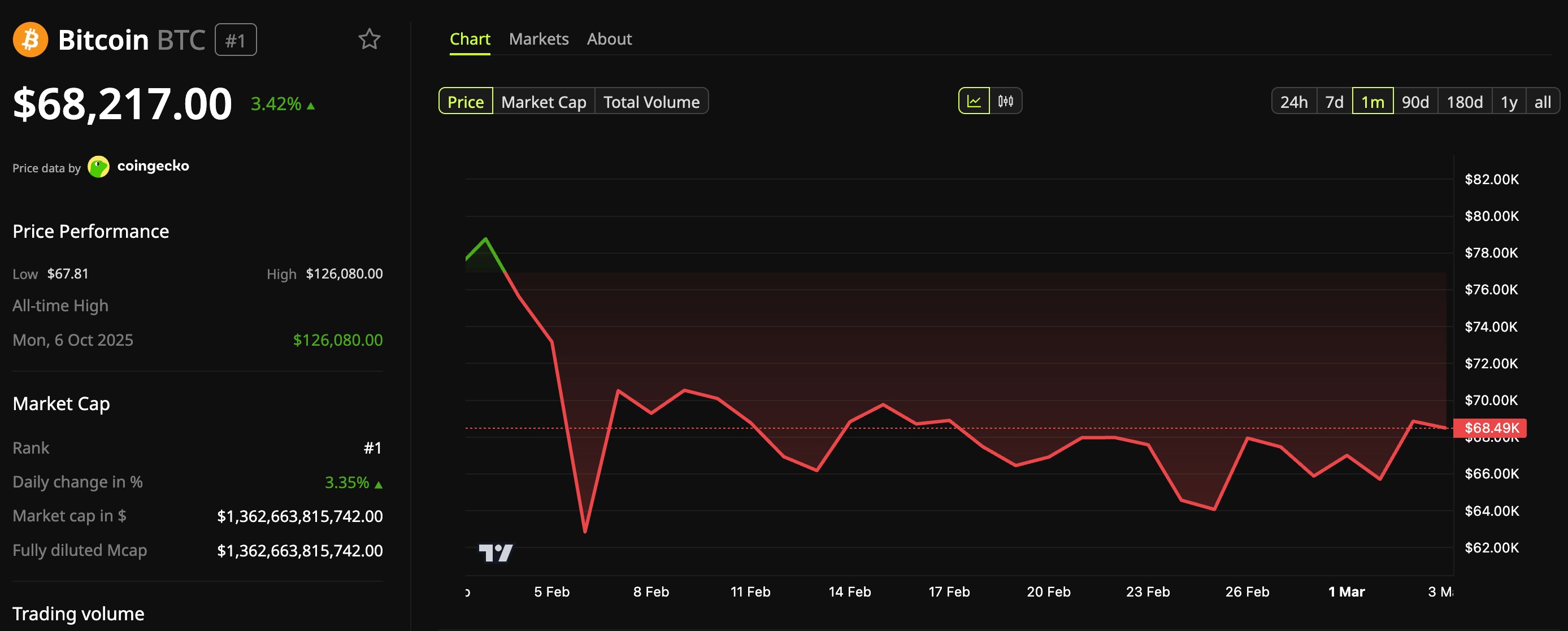
These projections come as Bitcoin shows modest signs of recovery despite heightened geopolitical tensions. At the time of reporting, the cryptocurrency was trading near $68,217, up 3.4% over the previous 24 hours.
Whether the market is truly near its bottom remains uncertain. What is clear, however, is that investors are closely watching both historical patterns and macroeconomic conditions as 2026 approaches.
