


The cryptocurrency market has taken a sharp downturn, with Bitcoin leading the losses as escalating geopolitical tensions weigh heavily on investor sentiment. After trading above $67,000 for much of the week, Bitcoin slipped back toward the $63,000 level, triggering broader losses across the digital asset space. Most major altcoins followed the decline, extending the market’s downward momentum.
Escalating Middle East Tensions Pressure Crypto Markets
The sell-off intensified after reports of coordinated missile strikes involving the United States and Israel targeting sites in Iran. The development heightened global uncertainty, prompting investors to reduce exposure to riskier assets such as cryptocurrencies.
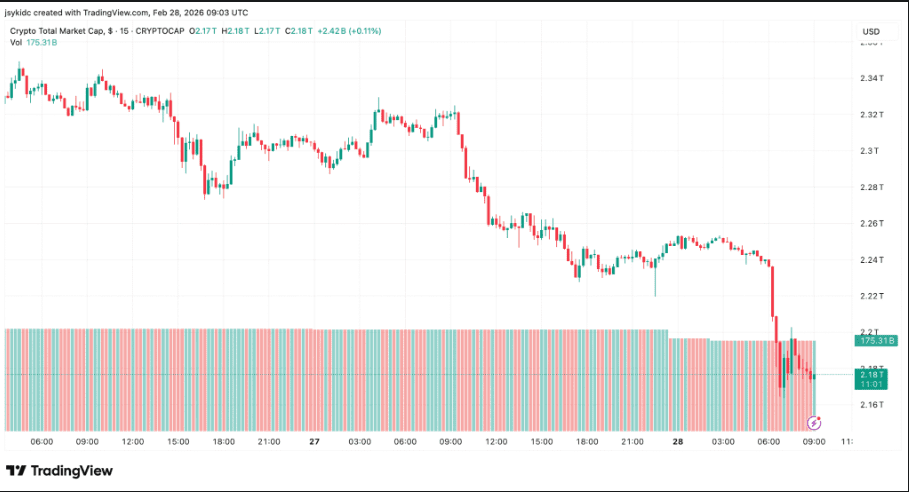
As a result, the total cryptocurrency market capitalization fell to approximately $2.21 trillion, representing a decline of about 5.5% over the past 24 hours.
Bitcoin dropped roughly 5% during the same period, while Ethereum fell close to 8% to around $1,800. Other major tokens also suffered notable losses, with XRP sliding about 7% and Solana declining by nearly 10%.
Military Developments Fuel Risk-Off Sentiment
Market participants largely attributed the downturn to fears surrounding the expanding conflict. In a public statement, Donald Trump described the military action as a large-scale and ongoing operation, emphasizing that the goal was to prevent Iran from developing nuclear weapons.

The U.S. has significantly increased its military presence in the region in recent months, aiming to apply pressure during negotiations related to Iran’s nuclear program. Initial strikes have reportedly targeted multiple Iranian assets, and while the full scope of the campaign remains unclear, analysts expect operations to continue for several days, adding to market uncertainty.
Inflation and Rate Outlook Add to Market Anxiety
Beyond geopolitics, macroeconomic factors are also weighing on crypto sentiment. Recent U.S. Producer Price Index data for January 2026 came in hotter than expected, raising concerns that inflation remains persistent.
Elevated inflation limits the Federal Reserve’s ability to cut interest rates, pushing expectations for easing further into the future. This outlook has strengthened the U.S. dollar and driven bond yields higher, creating additional pressure on risk-sensitive assets, including cryptocurrencies.
Lower interest rates typically support liquidity and encourage investment in speculative markets. However, with monetary easing appearing less likely in the near term, market confidence has deteriorated. Reflecting this shift, the Crypto Fear & Greed Index has returned to the “extreme fear” range, signaling heightened caution among investors.
