Bitcoin is moving through one of its most extended periods of subdued pricing in recent history. Market sentiment has deteriorated sharply, with the crypto fear-and-greed gauge dropping into extreme fear territory. At the same time, global political tensions and broader macroeconomic stress are weighing heavily on BTC, limiting its ability to regain higher price levels near $80,000. With momentum fading, traders are closely watching what direction comes next.

Bitcoin Struggles to Hold Key Support
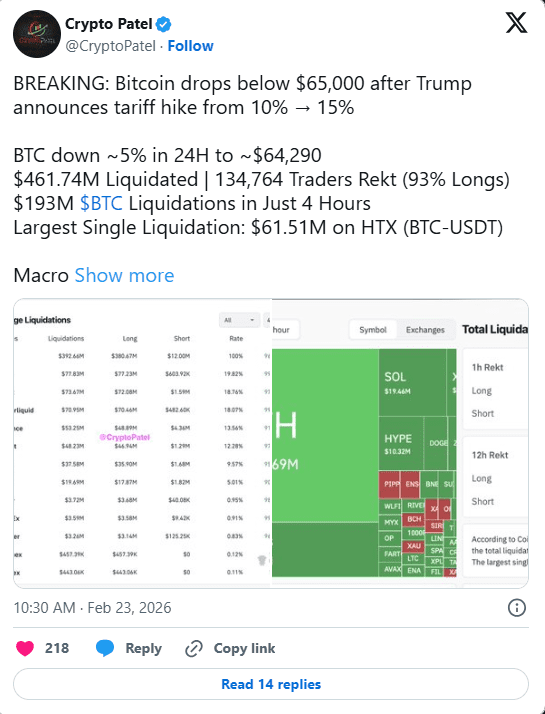
Bitcoin is currently hovering just above a critical support zone near $60,000. At the time of writing, BTC is trading around $63,000, with downside risks still present as new tariff-related developments from Donald Trump have added pressure to global markets. Heightened uncertainty has pushed investors into a defensive posture, making risk assets like Bitcoin less attractive in the short term.
Following the tariff increase announcement, Bitcoin saw a sharp intraday decline, triggering widespread liquidations across leveraged positions. A significant portion of long traders were forced out as volatility surged, reflecting a broader shift toward risk avoidance. Analysts note that excessive leverage amplified the move, reinforcing the fragile state of current market sentiment.
As investors step back from risk assets, capital has increasingly flowed into traditional safe havens. Gold has benefited the most from this rotation, recently reclaiming levels above $5,200 and strengthening its position as a preferred store of value during periods of uncertainty.
Analysts Weigh In on Bitcoin’s Next Move
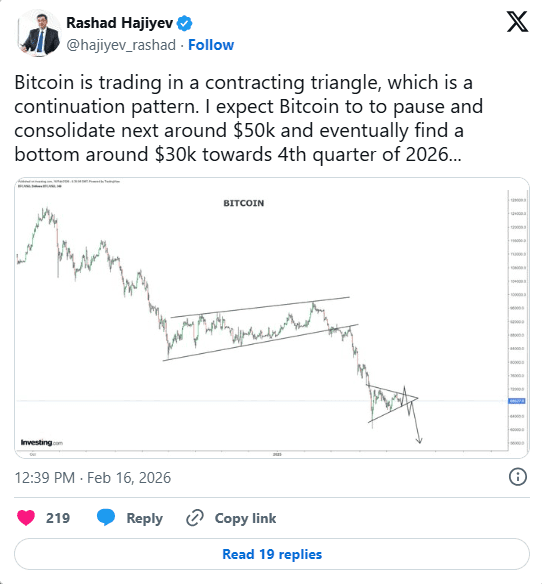
While gold continues to attract demand, Bitcoin remains under scrutiny as analysts debate its near-term direction. Market commentator Rashad Hajiyev has suggested that BTC could experience further consolidation before stabilizing. According to his analysis, Bitcoin may revisit lower price zones as precious metals gain strength amid ongoing geopolitical and economic concerns.
Technical indicators also suggest that Bitcoin is trading within a tightening price structure, often associated with extended consolidation phases. Some projections point to a deeper corrective move before a longer-term bottom is established.
Long-Term Confidence Still Intact
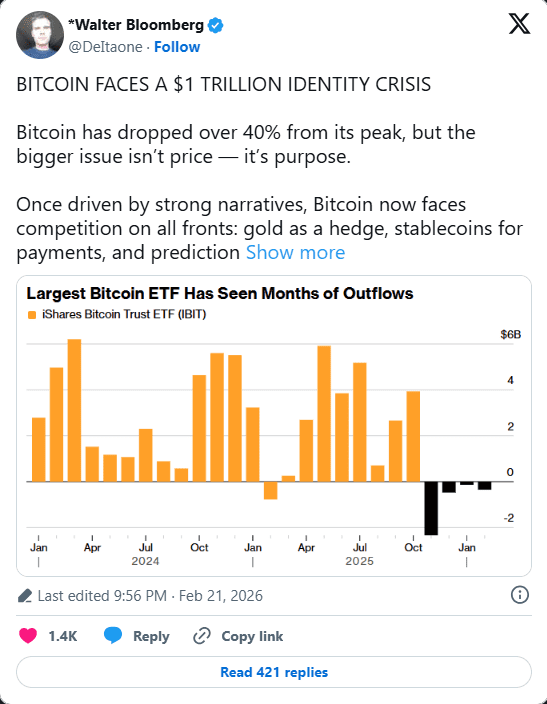
Despite short-term pressure, Bitcoin’s broader fundamentals continue to support its long-term relevance. Reports highlighted by Walter Bloomberg note that Bitcoin is facing increased competition from stablecoins, prediction markets, and traditional assets like gold. This shift has sparked debate over Bitcoin’s evolving role in the global financial system.

However, optimism remains among policymakers. Scott Bessent has indicated that clearer regulatory frameworks could help Bitcoin regain momentum and potentially reach new highs once legislative clarity improves.
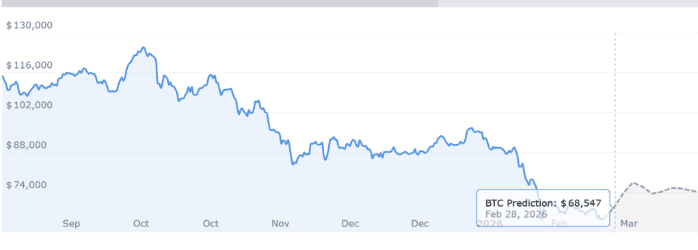
Looking ahead, data from CoinCodex suggests that Bitcoin could trade near $68,000 by the end of February. Longer-term forecasts remain bullish, with models projecting prices near $79,000 by the end of 2026 and significantly higher levels in the following decade.
Overall, while Bitcoin faces notable headwinds in the near term, long-term projections continue to reflect confidence in its growth potential, provided macro conditions eventually stabilize.