


Shiba Inu (SHIB) is one of the most talked-about tokens in crypto history, largely because of how quickly it captured attention after launching in 2020. Early momentum pushed the token into the spotlight, culminating in a dramatic peak during the 2021 bull market. Since then, like much of the broader crypto market, SHIB has gone through a prolonged cooldown.

Market data from CoinGecko shows that SHIB remains far below its historical high, reflecting both shifting market sentiment and the challenges of sustaining speculative hype. But price history alone doesn’t tell the full story. The real question for investors today is whether the project’s fundamentals support long-term relevance.
How Shiba Inu Is Evolving
Rather than remaining a purely speculative asset, the Shiba Inu ecosystem has been steadily expanding its scope. One of the biggest developments was the rollout of Shibarium, a layer-2 blockchain designed to improve scalability, lower transaction costs, and attract developers. A growing ecosystem often translates into more on-chain activity, which can strengthen long-term demand for the underlying token.
Beyond infrastructure, the team has also introduced ShibOS, a platform focused on helping companies integrate blockchain solutions into their operations. As more businesses explore Web3 tools, platforms that simplify adoption may find themselves well-positioned, especially if usability becomes a deciding factor.
The ecosystem has also experimented with virtual-world initiatives, signaling an interest in immersive digital experiences. While metaverse projects aren’t currently dominating headlines, trends in tech have a habit of cycling back when conditions change.
Supply, Burns, and the Long Game
One of SHIB’s most persistent challenges has been its large token supply. To address this, the project has continued exploring burn mechanisms intended to reduce circulation over time gradually. If implemented at scale, consistent burns could meaningfully alter supply dynamics, an important factor for long-term valuation.
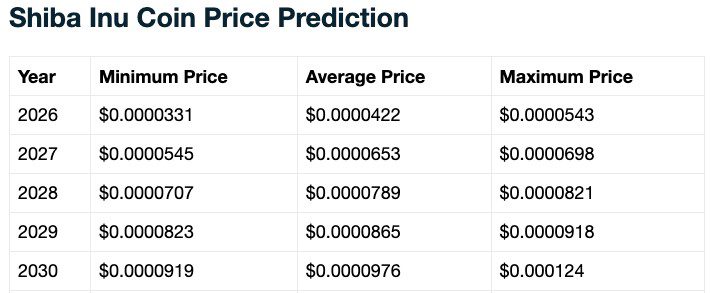
From an outlook perspective, some market analysts remain optimistic. Research firms like Telegaon suggest that sustained development and broader adoption could eventually push SHIB beyond its previous highs later in the decade.
