


The digital asset market appears to be entering a different phase, one defined by prolonged price weakness across leading cryptocurrencies. Many top coins have slipped to notably lower valuations, a classic sign of bearish conditions. This phase is typically characterized by steady declines and muted momentum rather than sharp rebounds. Given this backdrop, investors are left weighing their options: is this the moment to step in, cut losses, or simply wait things out?

Crypto Outflows Continue as Market Pressure Mounts
Recent data suggests that capital is steadily exiting the crypto space, underscoring the cautious mood among investors. Investment products tied to digital assets recorded roughly $173 million in net withdrawals over the past week, extending a streak of consecutive weekly outflows. Bitcoin accounted for the largest share of selling pressure, while exchange-traded products also contributed meaningfully to the decline.
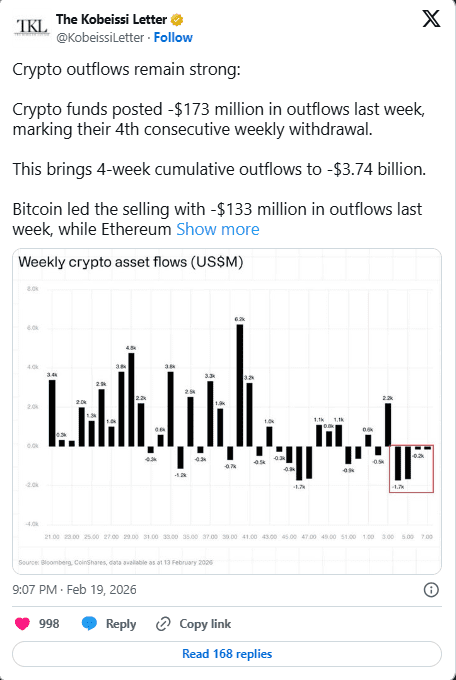
Overall, withdrawals have dominated fund activity in recent months, pushing cumulative outflows into the multi-billion-dollar range. This persistent capital flight reflects increasingly negative sentiment, with bearish expectations becoming more widespread across the market.
Bitcoin Holders Show a Split Strategy
On-chain trends reveal a divided approach among Bitcoin holders. Smaller participants, those owning fractional amounts, have been gradually increasing their balances, taking advantage of lower prices to accumulate. In contrast, mid-sized holders appear to be trimming their exposure, reducing their Bitcoin holdings during the same period.

This divergence highlights a redistribution dynamic, where larger wallets scale back while smaller ones step in, suggesting uncertainty about near-term price direction but confidence among long-term believers.
Could Bearish Momentum Intensify?
Market analytics indicate that downturns often deepen before stabilizing. Historically, the strongest bear phases are marked by price drawdowns of 70% or more, accompanied by shrinking trading volumes. While this environment can feel discouraging, it has also historically created opportunities for investors focused on long-term positioning rather than short-term gains.

Periods of low momentum have, in past cycles, rewarded patience and disciplined accumulation. That said, crypto remains highly volatile, and navigating a bear market requires careful risk management and thoughtful decision-making rather than emotional reactions.
As analysts note, downturns demand different strategies than bull markets. Success often hinges on adaptability, capital preservation, and a clear understanding of risk, rather than simply buying and holding through uncertainty.
